Wallet separation in crypto is one of the simplest security habits investors can build, yet it is often ignored.
Most people think crypto security starts and ends with a seed phrase.
They focus on keeping the recovery phrase offline, avoiding screenshots, using strong passwords, and maybe buying a hardware wallet. Those habits matter, but they do not solve every risk.
The bigger issue is how the wallet is used.
Many investors keep long-term holdings, DeFi positions, airdrop experiments, NFT mints, testnet activity, and random dApp connections inside the same wallet. That creates unnecessary exposure.
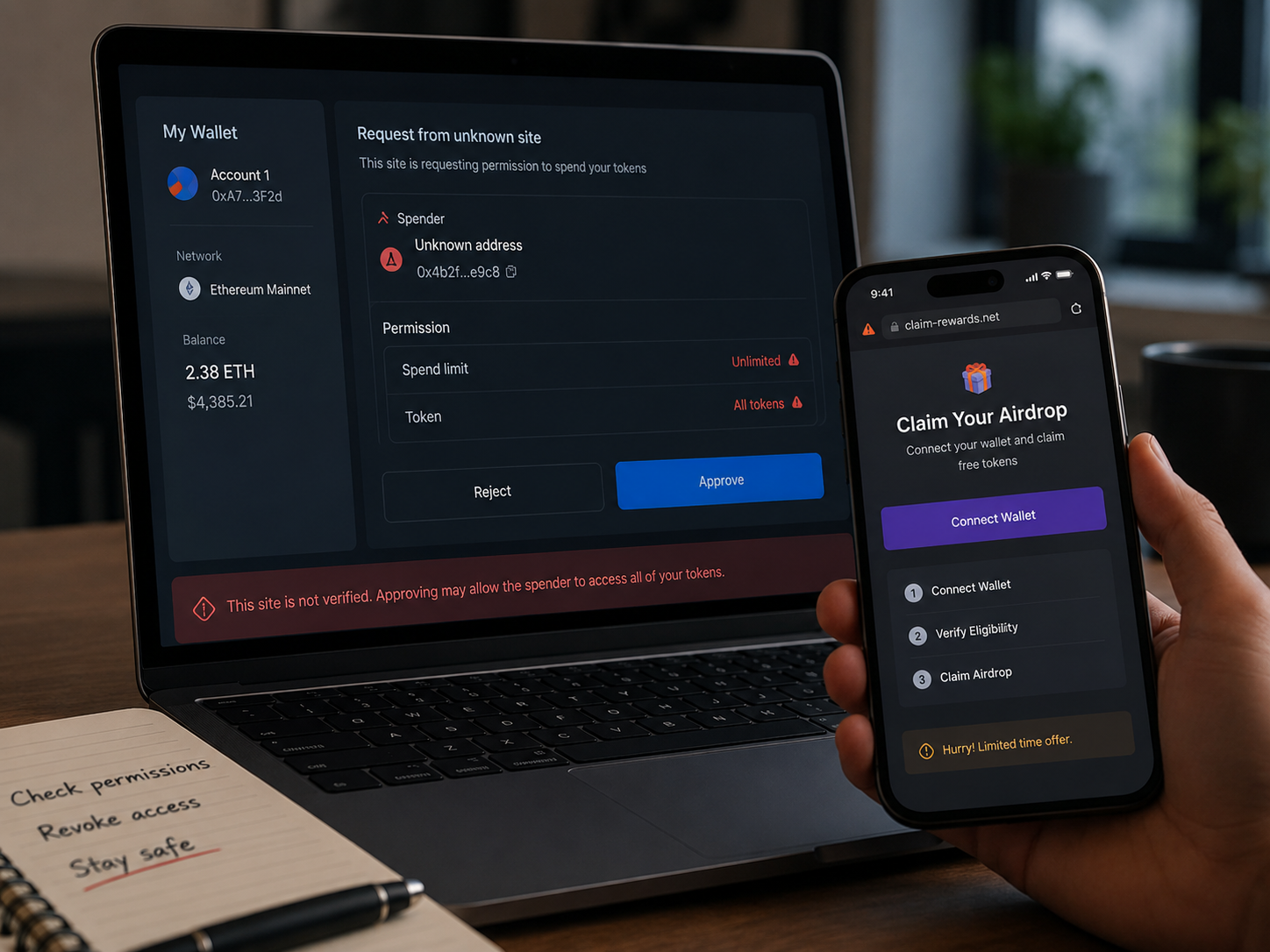
If that one wallet signs a malicious approval, connects to a fake claim page, or interacts with a compromised protocol, the risk does not stay limited to one small experiment.
It can affect the entire wallet.
That is why wallet separation in crypto is so important. A strong wallet separation in crypto strategy reduces the chance that one bad interaction can affect an entire portfolio.
The goal is simple:
Do not let one mistake expose everything.
Table of Contents
What Wallet Separation in Crypto Means
Wallet separation in crypto means using different wallets for different purposes instead of putting every activity into one address.
It is not complicated.
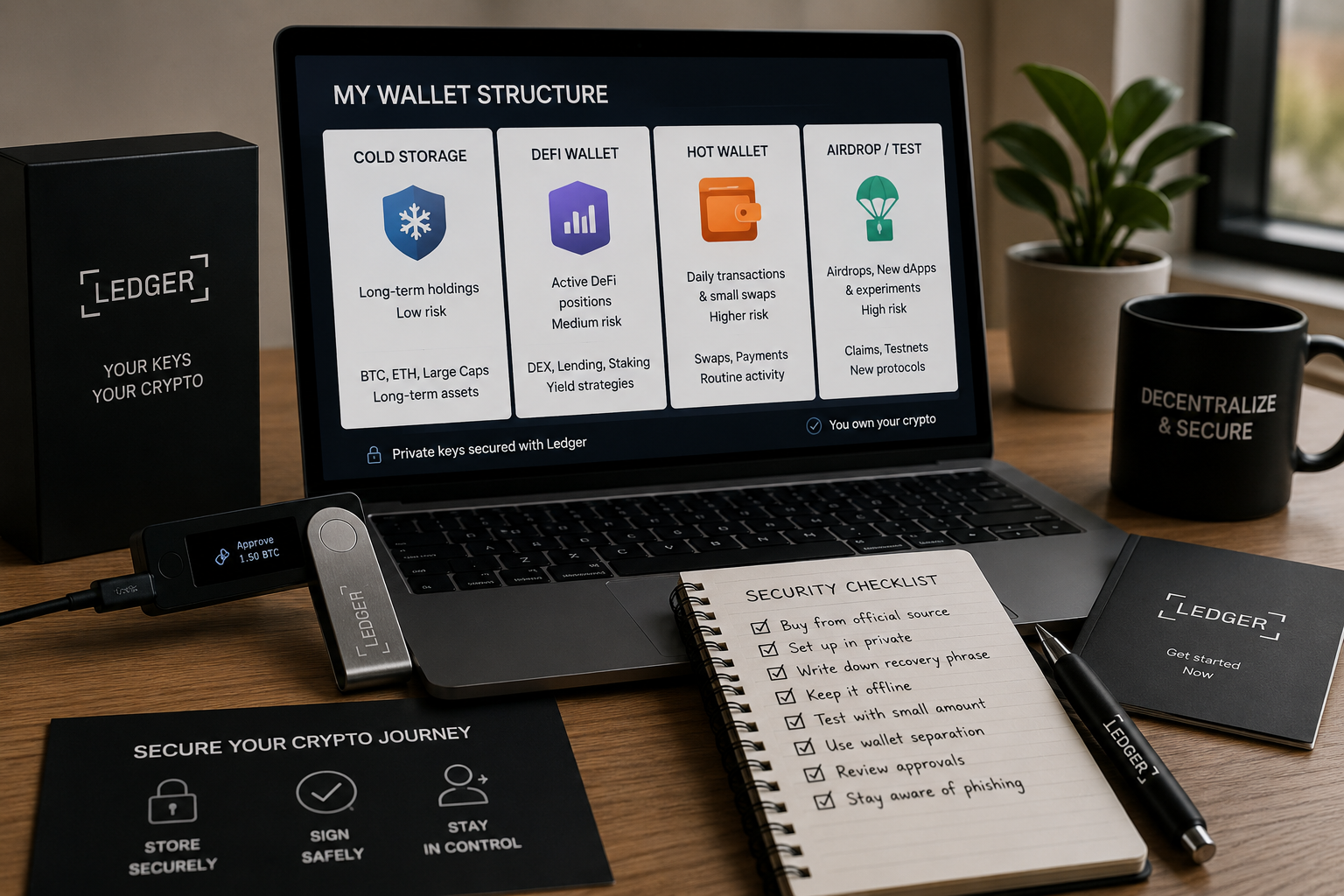
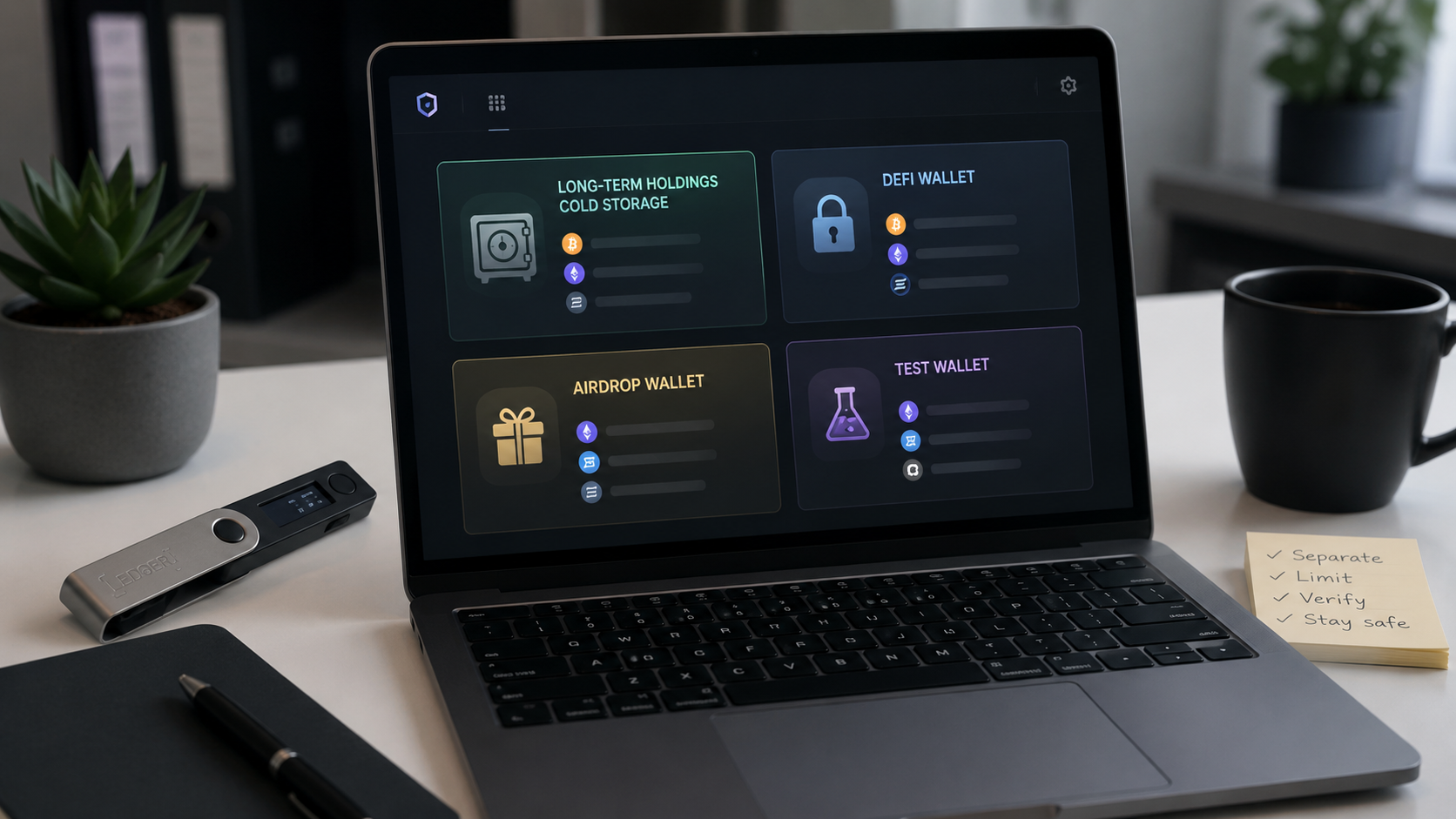
A basic setup can include:
- One wallet for long-term holdings.
- One wallet for active DeFi.
- One wallet for airdrops and new dApps.
- One wallet for testing risky or unfamiliar protocols.
- One exchange account or custodial account only when needed.
Each wallet has a different risk profile.
A long-term holding wallet should not be used to connect to random claim pages.
A DeFi wallet should not hold your entire portfolio.
An airdrop wallet should not contain assets you cannot afford to lose.
A testing wallet should be treated as disposable.
This structure creates risk boundaries.
If one wallet is exposed, the damage is limited.
That is the core value of wallet separation.
It does not make crypto risk disappear, but it prevents one bad signature from becoming a full portfolio problem.
Why One Wallet for Everything Is Dangerous
Using one wallet for everything feels convenient.
There is only one address to manage.
One wallet extension to open.
One transaction history to track.
One balance to monitor.
But convenience often creates concentration risk.
In crypto, a wallet is not just a storage account. It is also an identity layer, a signing device, an access point, and a permission manager.
That means every protocol interaction leaves traces.
A single wallet may contain:
- Old token approvals.
- DeFi permissions.
- NFT marketplace listings.
- Bridge interactions.
- Airdrop claim history.
- Smart contract signatures.
- Protocol connections.
- Token transfer records.
- Public portfolio signals.
The more a wallet is used, the larger its attack surface becomes.
This is especially important because wallet drainers often rely on users connecting wallets and approving transactions that give attackers control over funds. Chainalysis describes crypto drainers as Web3 phishing tools that impersonate legitimate projects and push victims into connecting wallets and approving transaction proposals.
If the wallet used for that interaction also holds long-term assets, the risk becomes much larger.
For deeper context, see BlockCodex’s guide on “What Is a Wallet Drainer in Crypto? 7 Critical Warning Signs”.
The problem is not only the scam.
The problem is the lack of separation before the scam happens.
Hot Wallets, Cold Wallets, and Risk Layers
Wallet separation in crypto works best when investors understand the difference between hot wallets and cold wallets.
A hot wallet is connected to the internet and usually used for regular transactions. Browser wallets and mobile wallets are common examples.
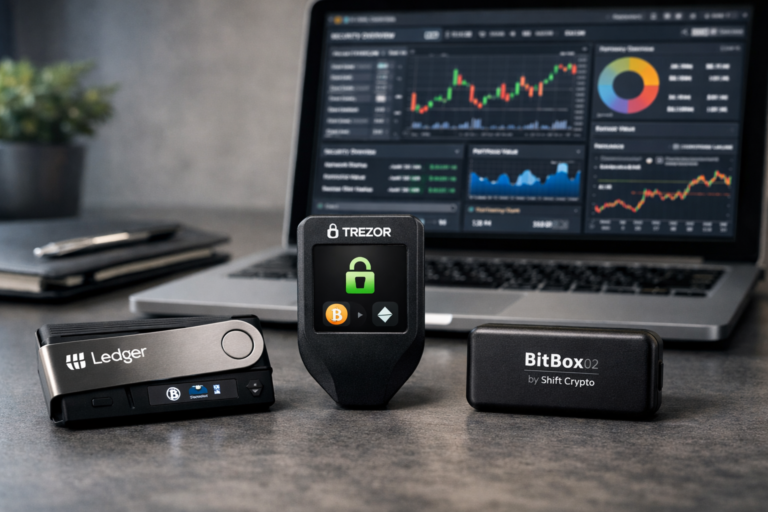
A cold wallet keeps private keys offline and is usually used for long-term storage. Hardware wallets are a common cold storage option because the private key stays on the device and transactions must be physically confirmed. MetaMask’s security guidance notes that users holding a large value of tokens should consider a hardware wallet, since hardware wallets keep private keys away from online attackers.
This does not mean hot wallets are bad.
Hot wallets are useful for:
- DeFi activity.
- Airdrop claims.
- Small swaps.
- Testing new protocols.
- NFT interactions.
- Daily crypto usage.
Cold wallets are better suited for:
- Long-term holdings.
- Large-value assets.
- Infrequent transactions.
- Portfolio reserves.
- Assets that do not need regular DeFi interaction.
Ledger’s educational content explains that different wallet types serve different needs, and that hardware wallets are designed to keep private keys offline while still allowing users to sign transactions when needed.
That makes hardware wallets useful inside a wallet separation crypto strategy.
The mistake is not using a hot wallet.
The mistake is using the same hot wallet for everything.
For a broader setup, see BlockCodex’s article on “Best Crypto Security Stack: 7 Practical Layers to Protect Digital Assets“.
The Behavioral Side of Wallet Security
Wallet separation in crypto is underrated because it is behavioral, not technical.
It does not require complex cryptography.
It does not require advanced coding knowledge.
It does not require professional security tools.
It requires discipline.
That is exactly why many users skip it.
Most crypto losses do not happen because users fail to understand blockchain theory. They happen because users click too quickly, connect the wrong wallet, approve the wrong contract, trust the wrong page, or use the wrong wallet for the wrong activity.
Wallet separation reduces the consequences of those mistakes.
It accepts a realistic truth:
Even careful users can make bad decisions under pressure.
A fake airdrop can look convincing.
A phishing link can come from a compromised account.
A wallet popup can look routine.
A DeFi approval can feel harmless.
A new protocol can seem legitimate until it is not.
Security should not depend on perfect behavior every time.
Good security design assumes that mistakes can happen.
Wallet separation gives those mistakes a smaller blast radius.
Why Wallet Separation Matters for DeFi
DeFi is powerful, but it increases wallet exposure.
Every swap, bridge, vault deposit, lending interaction, liquidity pool, staking contract, or yield farm may require some form of wallet approval or smart contract interaction.
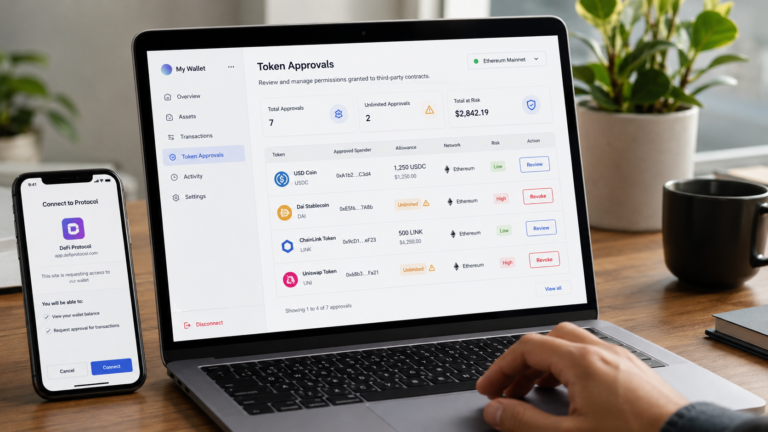
Token approvals are normal in DeFi, but they can also create long-term permissions.
MetaMask explains that token approvals give a dApp permission to access and move a specific type of token from a wallet. That permission may be necessary for normal DeFi usage, but it also means users need to understand what they are approving.
This is where wallet separation becomes practical.
Instead of using a main wallet for every DeFi action, investors can create a dedicated DeFi wallet with limited funds.
That DeFi wallet can be used for:
- Swaps.
- Liquidity pools.
- Bridges.
- Lending markets.
- Yield strategies.
- Smaller experimental positions.
The long-term wallet stays separate.
If an approval is risky, the exposure is limited to the DeFi wallet.
For approval hygiene, see BlockCodex’s guide on “How to Check Token Approvals Before Using DeFi: 7 Smart Safety Steps“.
Wallet separation does not replace approval checks.
It makes approval mistakes less destructive.
Why Wallet Separation Matters for Airdrops
Airdrops are one of the strongest reasons to separate wallets.
Airdrop farming often requires users to connect wallets to new protocols, bridge across chains, mint assets, sign messages, interact with testnets, and claim rewards from unfamiliar pages.
That creates risk.
Some airdrops are legitimate.
Some are poorly designed.
Some are fake.
Some are copied by scammers.
Some become phishing bait after gaining attention.
A dedicated airdrop wallet is useful because it limits exposure.
That wallet should not hold long-term assets.
It should not be the same wallet used for serious DeFi positions.
It should not contain your main portfolio.
It should be treated as a higher-risk wallet.
This does not mean every airdrop is dangerous.
It means the category attracts scams because users are expecting free rewards.
For a safer research workflow, see BlockCodex’s article on “Legit Crypto Airdrops: 7 Smart Checks Before Connecting Your Wallet”.
Airdrop hunting without wallet separation turns every claim into a portfolio-level risk.
Airdrop hunting with wallet separation keeps the risk contained.
Why Hardware Wallets Still Matter
Wallet separation in crypto is not an argument against hardware wallets.
It actually makes hardware wallets more useful.
A strong setup can combine both:
- Hardware wallet for long-term assets.
- Separate hot wallet for DeFi.
- Separate wallet for airdrops.
- Separate wallet for testing.
- Regular approval reviews.
The hardware wallet becomes the protected reserve layer.
It should not be used for every random dApp connection. Its value is highest when it signs fewer transactions, connects to fewer protocols, and avoids unnecessary approvals.
Ledger’s support documentation explains that users can check and revoke token approvals using tools such as Etherscan, which is important because approvals can grant smart contracts permission to access assets.
That is an important point.
A hardware wallet protects the private key, but it does not magically make every signed approval safe.
If a user confirms a malicious approval with a hardware wallet, the approval can still be dangerous.
This is why hardware wallets and wallet separation should work together.
The hardware wallet protects key custody.
Wallet separation protects usage behavior.
For a full comparison of storage options, see BlockCodex’s guide on “Best Hardware Wallets (2026): Ledger vs Alternatives for Secure Crypto Storage”.
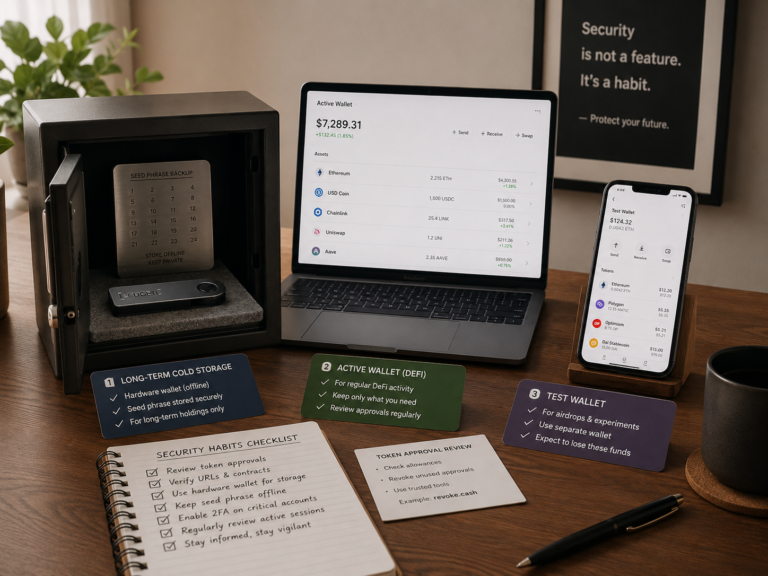
A Practical Wallet Separation Setup
A practical wallet separation in crypto setup does not need to be complicated.
For most investors, four wallet categories are enough.
| Wallet Type | Purpose | Risk Level |
|---|---|---|
| Cold storage wallet | Long-term holdings and large assets. | Low interaction risk. |
| DeFi wallet | Swaps, lending, liquidity, and staking. | Medium risk. |
| Airdrop wallet | Claims, eligibility checks, and new protocols. | High risk. |
| Test wallet | Unknown dApps, testnets, and experiments. | Very high risk. |
The cold storage wallet should hold assets that do not need regular interaction.
The DeFi wallet should hold only the capital needed for active strategies.
The airdrop wallet should hold small amounts for gas and claim activity.
The test wallet should be treated as disposable.
This setup creates structure.
It also improves decision-making because each wallet has a defined role.
Before signing anything, the user can ask:
“Is this the right wallet for this action?”
That question alone prevents many avoidable mistakes.
How Much Crypto Should Each Wallet Hold?
There is no universal answer.
The right amount depends on portfolio size, risk tolerance, experience, and activity level.
But the principle is clear:
A high-risk wallet should not hold high-value assets.
A practical approach looks like this:
- Keep long-term holdings in cold storage.
- Keep only active DeFi capital in the DeFi wallet.
- Keep only small gas balances in the airdrop wallet.
- Keep minimal funds in the test wallet.
- Move profits or unused balances back to safer storage.
- Avoid leaving idle assets in experimental wallets.
This matters because users often forget funds in wallets they use for risky activity.
A wallet used for a fake claim page, new mint, or unknown dApp should not also contain valuable tokens.
Wallet separation is not only about creating more addresses.
It is about assigning risk limits to each address.
Wallet Separation and Privacy
Wallet separation also has a privacy benefit.
Blockchains are public.
If one wallet is used for everything, observers may connect the user’s DeFi activity, NFT purchases, airdrop claims, token transfers, exchange withdrawals, and long-term holdings into one visible profile.
That can create unnecessary exposure.
Wallet separation in crypto can reduce this visibility by keeping different activities in different addresses.
However, users should not assume that separation creates perfect privacy.
On-chain activity can still be linked through transfer patterns, timing, bridge activity, exchange withdrawals, ENS names, NFT interactions, social posts, or repeated behavior.
The goal is not perfect anonymity.
The goal is to avoid making the entire portfolio easy to map from one address.
From a security perspective, this also matters.
The more visible a large wallet is, the more attractive it may become to scammers.
Common Wallet Separation Mistakes
Wallet separation only works if it is applied consistently.
Here are common mistakes to avoid.
Mistake 1: Funding Every Wallet From the Same Visible Source
If every wallet is directly funded from the same address, the separation may be easier to trace.
This does not always matter, but users should understand the visibility.
Mistake 2: Using the Cold Wallet for Random dApps
A cold wallet loses much of its security advantage if it is used for every DeFi experiment.
Cold storage should remain low-interaction.
Mistake 3: Keeping Too Much Value in a DeFi Wallet
A DeFi wallet should hold what is needed for active strategies, not the entire portfolio.
Mistake 4: Forgetting Old Approvals
Even separated wallets need approval reviews.
Old permissions can remain active long after the user has stopped using a protocol.
Mistake 5: Treating Airdrop Wallets as Safe
Airdrop wallets should be considered high-risk by default.
They are useful because they limit exposure, not because they are inherently safe.
Mistake 6: Not Documenting Wallet Purpose
Users should know which wallet is used for which activity.
A simple note can prevent confusion.
The goal is to create a system that is easy to follow.
Security habits fail when they become too complicated.
Wallet Separation in crypto Checklist
Before using a wallet, ask:
- Is this the right wallet for this activity?
- Does this wallet hold more value than necessary?
- Have I reviewed its token approvals recently?
- Am I connecting to an official website?
- Does this wallet need to interact with this protocol?
- Could this action expose long-term holdings?
- Is this activity better suited for an airdrop wallet or test wallet?
- Should unused funds be moved back to cold storage?
- Would I be comfortable losing the funds in this wallet?
That last question is important.
If the answer is no, the wallet may be holding too much for its risk category.
Conclusion
Wallet separation in crypto is one of the most underrated security habits because it is simple, behavioral, and easy to postpone.
But it solves a real problem.
Crypto users do not only need to protect private keys. They also need to control how wallets are exposed to protocols, approvals, airdrops, bridges, and signatures.
Using one wallet for everything creates unnecessary concentration risk.
A better setup separates long-term holdings, active DeFi, airdrops, and testing activity into different wallets.
This does not remove all risk.
But it makes mistakes less catastrophic.
A fake claim page should not expose long-term holdings.
A risky DeFi approval should not threaten the entire portfolio.
A testnet experiment should not sit next to valuable assets.
A hardware wallet should not be used for every random connection.
The strongest crypto security habits are often not dramatic.
They are quiet, repeatable, and practical.
Wallet separation is one of them.