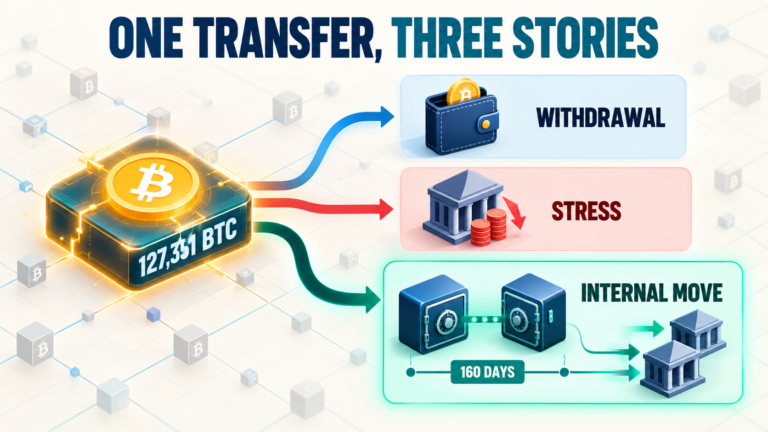
Whale transfer analysis begins with an uncomfortable fact: a blockchain records movement, not motive. On November 28, 2022, one Bitcoin…
Category: On-Chain
Data-driven on-chain analysis based on blockchain metrics, flows, and behavioral indicators.
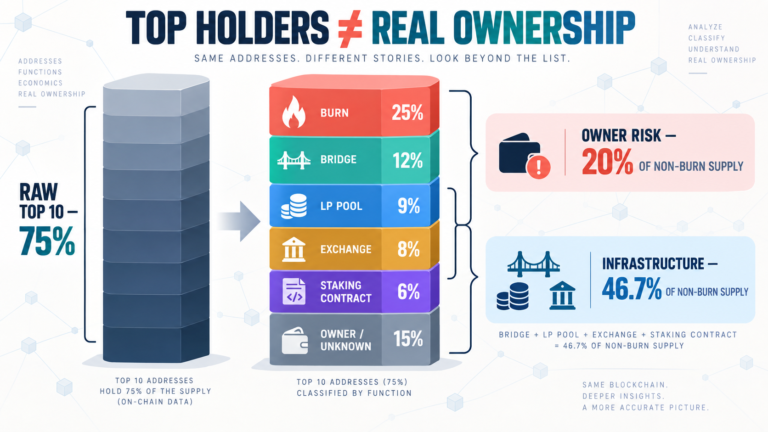
Token Holder Concentration in Crypto: Top Holders vs Real Ownership
Token holder concentration in crypto is often summarized with one number: the percentage of supply held by the top ten…
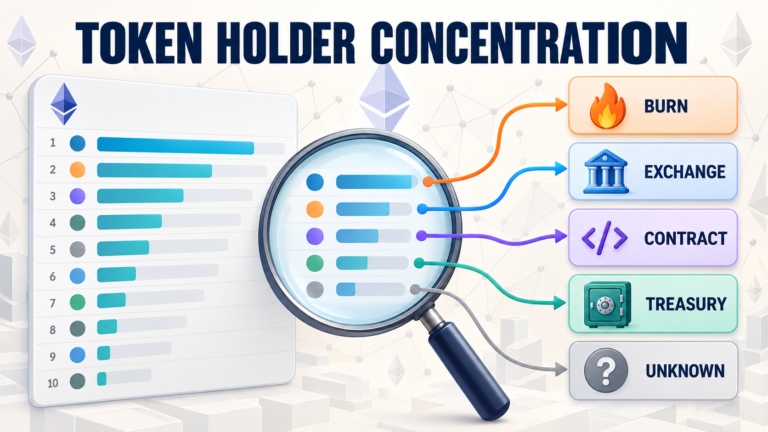
Check Token Holder Concentration on Etherscan Before Buying
Check token holder concentration on Etherscan before buying an ERC-20 token, but do not stop at the percentages in the…
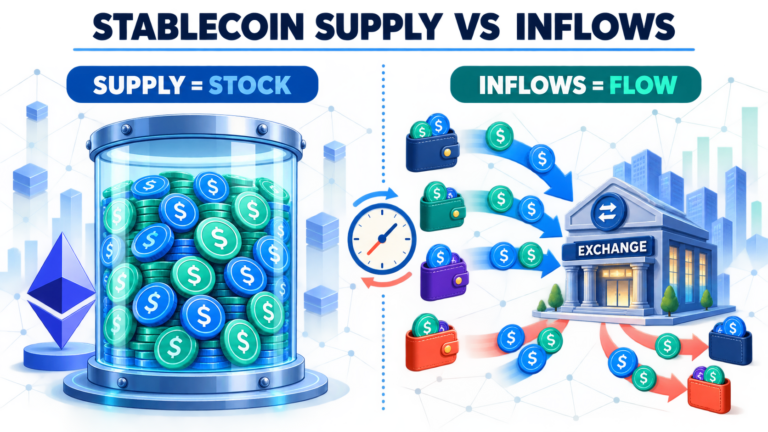
Stablecoin Supply vs Stablecoin Inflows: What Is the Difference?
Stablecoin supply vs inflows is a comparison between a stock and a flow. Supply measures how much stablecoin value exists on…
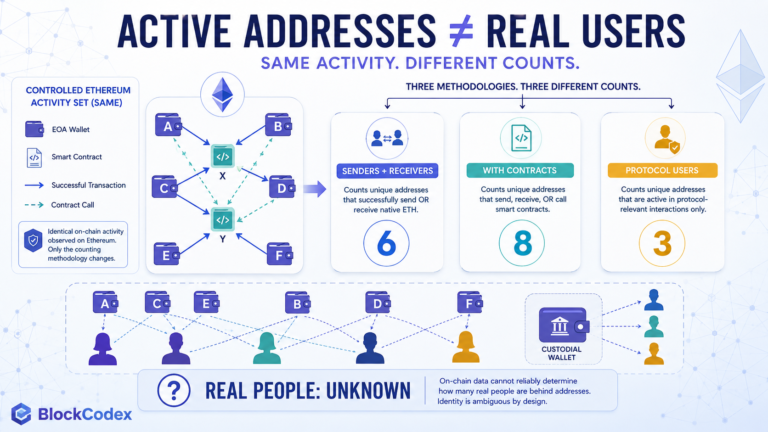
Active Addresses vs Real Users in Crypto: What the Numbers Miss
Active addresses are one of the most widely used measures of blockchain adoption. When the number rises, the usual conclusion…
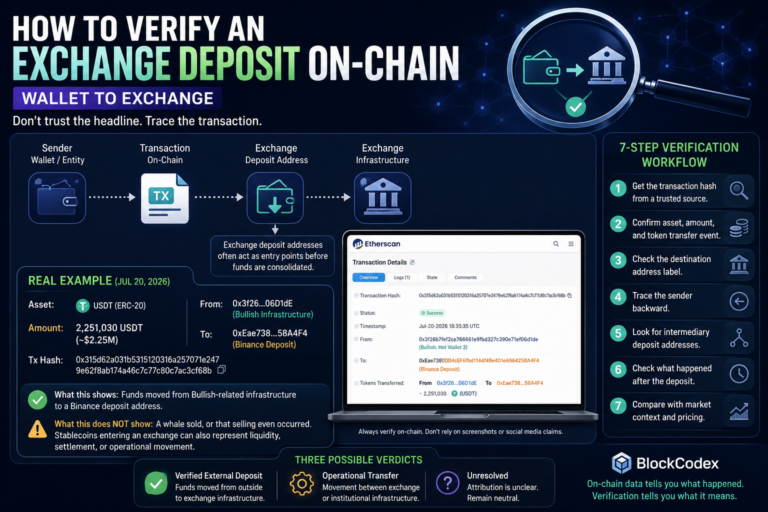
How to Verify an Exchange Deposit On-Chain: Wallet to Exchange
Learning how to verify an exchange deposit on-chain is one of the simplest ways to avoid overreacting to whale alerts.…
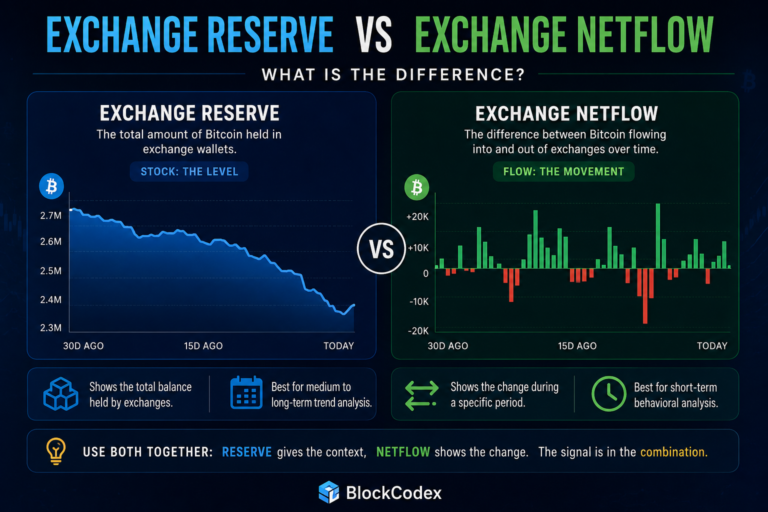
Exchange Reserve vs Exchange Netflow: What Is the Difference?
Understanding exchange reserve vs exchange netflow starts with a simple distinction: reserve tells you how much Bitcoin is currently sitting…
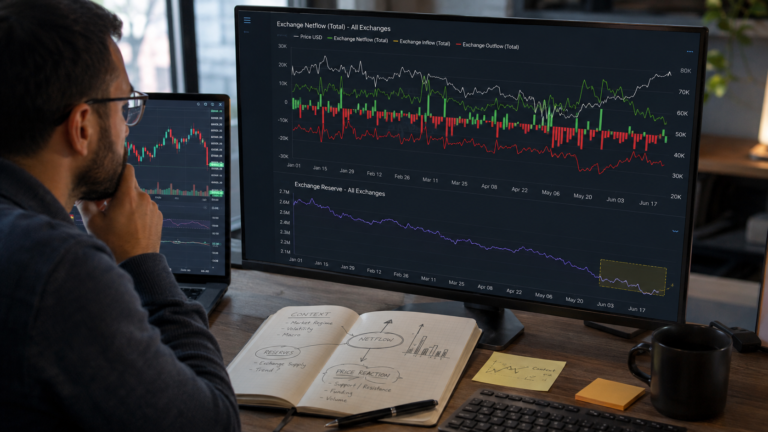
How to Read Exchange Netflow on CryptoQuant Without Overreacting
Learning how to read exchange netflow correctly starts with understanding what the metric cannot tell you. A large positive bar…

Active Addresses vs Real Users in Crypto: 7 Critical Reasons the Metric Misleads
Active addresses vs real users is one of the most misread comparisons in crypto. Investors see active addresses double and…
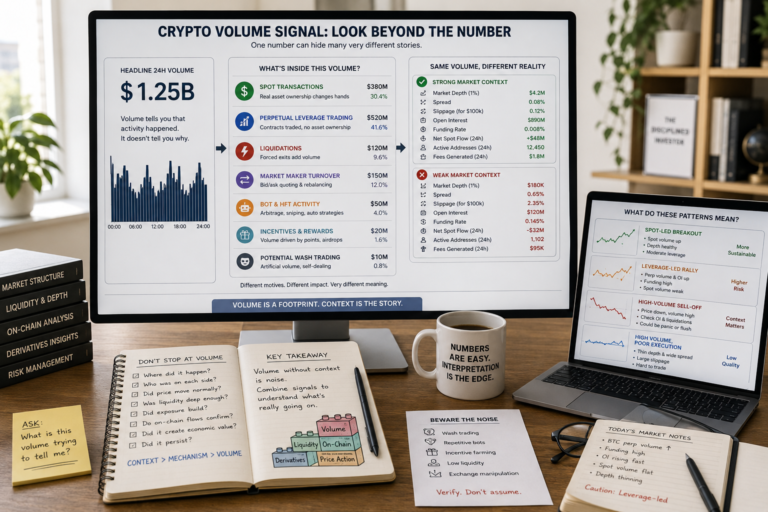
Crypto Volume Signal: 7 Reasons Volume Alone Misleads Investors
Trading volume feels reassuring because it is easy to understand. A token traded $500 million today instead of $100 million…