The Psychology of Crypto Investors
Crypto investor psychology is one of the strongest forces behind market cycles, but it is often ignored because it feels less measurable than price, TVL, volume, or on-chain activity.
That is a mistake.
Crypto markets are not moved only by technology, tokenomics, liquidity, or macro conditions. They are also shaped by emotion, attention, social proof, risk appetite, and narrative momentum.
A token can have strong fundamentals and still underperform if investors lose confidence. Another asset can rally aggressively because attention, leverage, and belief converge at the right moment.
This does not mean psychology replaces data. It means psychology explains how investors react to data.
The most important insight is simple:
Crypto cycles are not only capital cycles. They are attention cycles.
When attention expands, risk appetite rises. When risk appetite rises, capital rotates faster. When capital rotates faster, narratives become stronger. Eventually, expectations outrun reality.
That is where most investors make mistakes.
Table of Contents
Why Crypto Investor Psychology Matters
Crypto is a market where information moves instantly, narratives spread globally, and price action is visible 24/7.
That creates a difficult environment for decision-making.
Investors are constantly exposed to:
- price alerts
- influencer narratives
- screenshots of gains
- token launch hype
- fear-based news
- leverage-driven volatility
- social comparison
- “early opportunity” framing.
This environment rewards fast reaction emotionally, but often punishes it financially.
Research from the Bank for International Settlements found that when Bitcoin prices rise, more people download and actively use crypto exchange apps. The same research estimated that 73% to 81% of retail investors likely lost money on their initial Bitcoin investment during the studied period.
That finding matters because it shows a core behavioral pattern: many retail investors enter after prices rise, not before.
In other words, attention often follows performance.
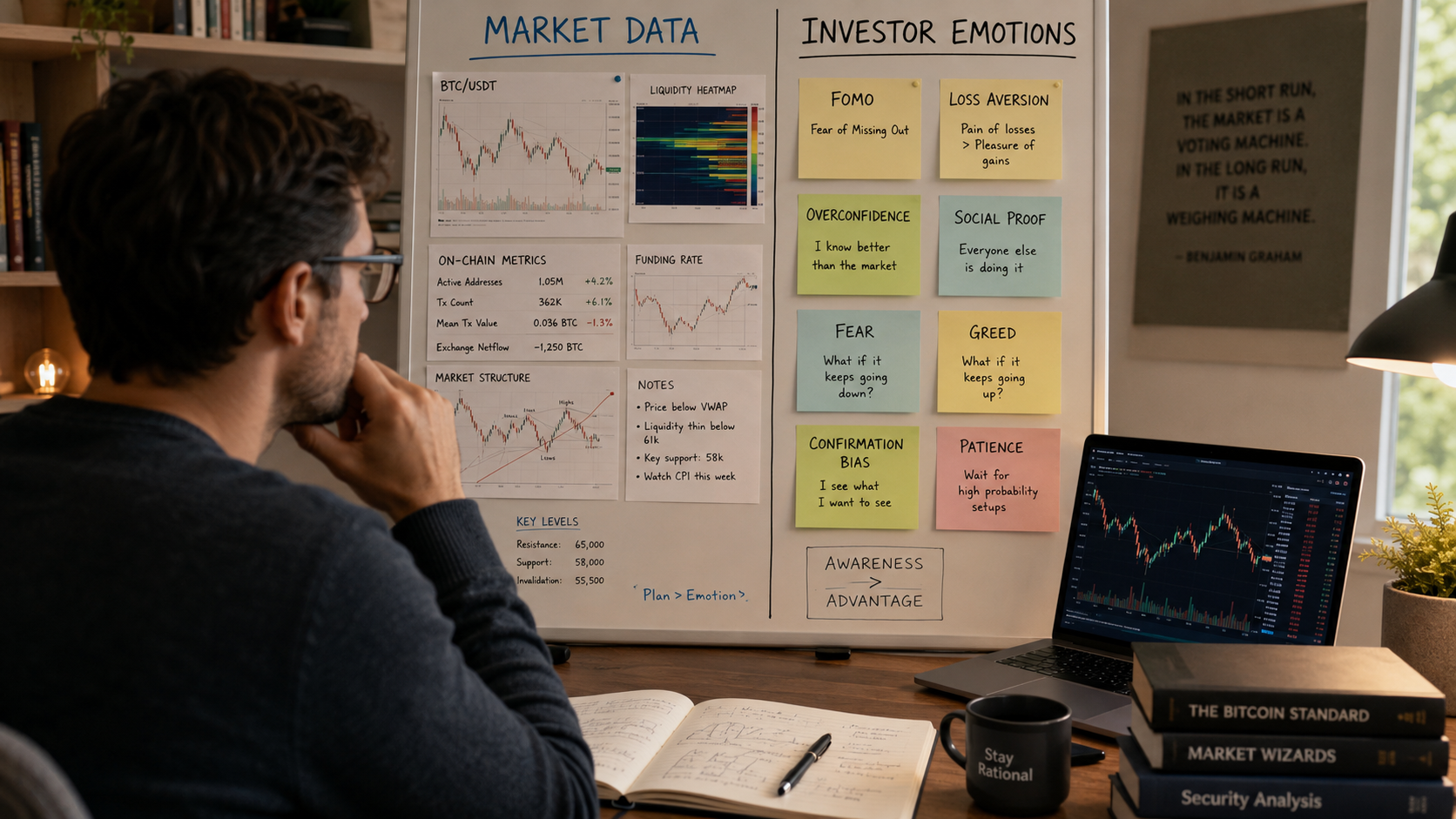
That is the foundation of FOMO.
FOMO: The Engine of Late-Cycle Buying
FOMO is not just excitement. It is a decision-making shortcut.
Investors see price rising and assume that something important is happening. They may not understand the protocol, valuation, liquidity, token unlocks, or market structure. But the speed of the move creates urgency.
Common FOMO signals include:
- “everyone is talking about it”
- rapid price increase
- viral charts
- influencer coverage
- exchange listing rumors
- screenshots of profits
- claims that “this is still early.”
The problem is that FOMO compresses research time.
Instead of asking, “Is this risk worth taking?” investors ask, “What if I miss it?”
That shift is dangerous.
A FOMO-driven investor is not evaluating probability. They are trying to avoid regret.
This is why market tops often feel safest emotionally. Everyone appears confident. Liquidity seems abundant. Narratives feel obvious. But that is often when risk is highest.
For a deeper framework on separating price movement from real market structure, see BlockCodex’s guide: “Crypto Market Cycles Explained: 7 On-Chain Signals Investors Should Track”.
Loss Aversion: Why Investors Hold Losers Too Long
Loss aversion is one of the most important concepts in behavioral finance.
In simple terms, investors often feel losses more intensely than equivalent gains. In crypto, this effect becomes amplified because drawdowns can be extreme.
A token can fall 30%, 50%, or 80%, and investors still hesitate to sell because selling makes the loss feel “real.”
Instead, they may tell themselves:
- “It will recover.”
- “I am here for the long term.”
- “The project is still building.”
- “Whales are accumulating.”
- “I will sell when I break even.”
Sometimes patience is rational. But sometimes it is just loss avoidance.
The problem is that crypto investors often confuse conviction with attachment.
Conviction is based on updated evidence. Attachment is based on the price paid.
A useful question is:
Would I buy this asset today at the current price, with the information I now have?
If the answer is no, the position may be driven by loss aversion rather than analysis.
Social Proof and Narrative Contagion
Crypto narratives spread faster than fundamentals.
A new theme can dominate the market within days:
- AI tokens
- restaking
- memecoins
- real-world assets
- modular blockchains
- Layer 2 ecosystems
- DePIN
- Bitcoin ecosystem assets.
Narratives matter because they coordinate attention. When investors believe other investors care about a theme, they become more likely to allocate capital to it.
This creates narrative contagion.
Social proof reinforces the cycle:
- more posts create more attention
- more attention creates more buying
- more buying validates the narrative
- higher prices attract more posts.
The risk is that investors begin outsourcing conviction to the crowd.
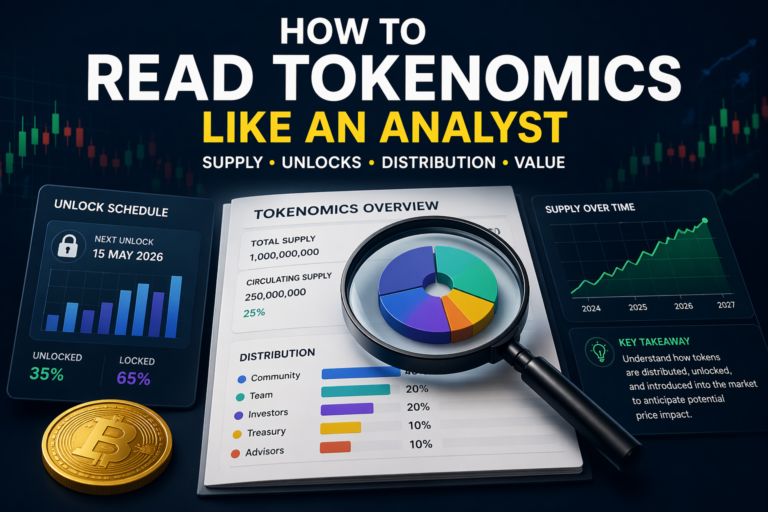
A strong narrative can hide weak liquidity, poor tokenomics, low real usage, or fragile incentives.
This is why narrative analysis should always be paired with data.
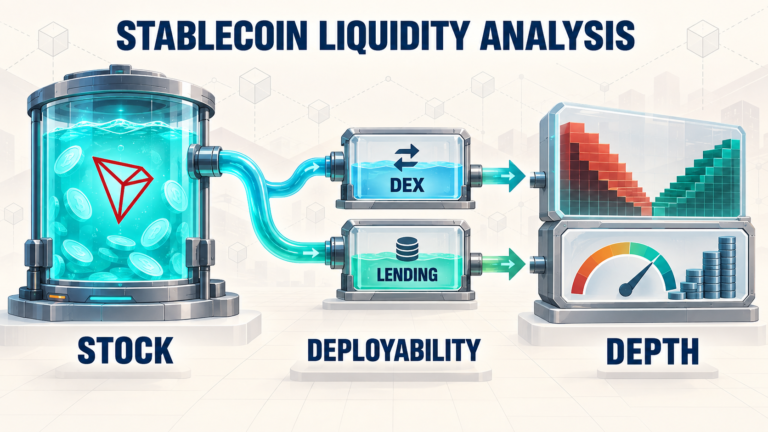
For example, if an ecosystem narrative is gaining attention, investors should check whether developer activity, stablecoin liquidity, DeFi usage, and user retention are also improving. BlockCodex covers this framework in “Crypto Ecosystem Growth: 7 Data Signals That Reveal Real Network Expansion”.
Overconfidence After Gains
One of the most dangerous moments for crypto investors comes after a profitable trade.
Profit can create the illusion of skill.
An investor buys a token, it rises quickly, and they assume the decision was correct. But the gain may have come from broader market liquidity, narrative rotation, exchange flows, or luck.
Overconfidence creates several risks:
- increasing position size too quickly
- using leverage after a win
- ignoring downside scenarios
- reducing research discipline
- assuming past timing skill will repeat
- chasing lower-quality assets.
This is especially dangerous in bull markets because almost everything can rise together.
A rising market makes risk management look unnecessary — until liquidity reverses.
The better approach is to separate outcome quality from decision quality.
A profitable trade can be a bad decision that worked.
A losing trade can be a good decision that failed within a defined risk plan.
That distinction is what separates investing from gambling.
Leverage and the Psychology of Forced Decisions
Leverage changes investor psychology because it reduces time.
A spot investor can wait through volatility. A leveraged trader may be forced to act because of liquidation risk, margin calls, or funding costs.
This creates emotional pressure.
Leverage makes investors more reactive to:
- short-term price moves
- liquidation maps
- funding rates
- social media fear
- intraday volatility
- exchange alerts.
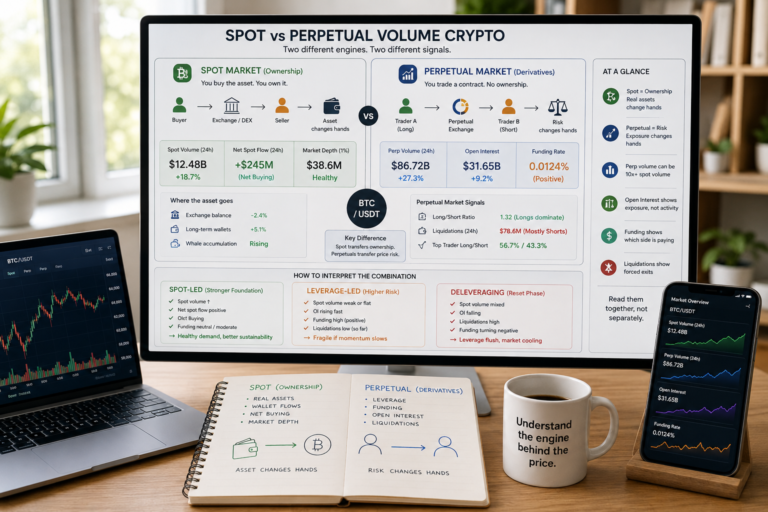
CoinGecko’s 2025 crypto industry reporting shows the scale of derivatives in crypto markets: centralized exchange perpetual volume reached $86.2 trillion in 2025, while decentralized perpetual volume grew 346% to $6.7 trillion.
That matters because derivatives are not just market infrastructure. They shape behavior.
When leverage builds, investors become more sensitive to short-term price movement. That can amplify volatility and create liquidation cascades.
The psychological point is simple:
Leverage turns volatility into urgency.
And urgency usually weakens decision quality.
Scarcity, Identity, and “Community Conviction”
Crypto investing is not only financial. It often becomes social.
Investors may identify with ecosystems, communities, or narratives. They become “ETH people,” “SOL people,” “Bitcoin-only,” “AI token believers,” or “DeFi natives.”
Community can be useful. It creates education, engagement, and long-term participation.
But identity can also distort judgment.
When an investment becomes part of someone’s identity, negative information feels like a personal attack. The investor may reject criticism, ignore risk, and overvalue bullish arguments.
This creates confirmation bias.
They look for:
- bullish threads
- supportive charts
- whale accumulation narratives
- selective on-chain data
- optimistic roadmap updates.
And they dismiss:
- unlock pressure
- declining usage
- weak liquidity
- security issues
- poor token value accrual
- developer migration.
The stronger the identity attachment, the harder it becomes to update the thesis.
A healthy investor can support an ecosystem without becoming emotionally dependent on its success.
The Role of Scams and Trust Exploitation
Crypto investor psychology is also exploited by scammers.
Scams work because they manipulate powerful emotions:
- greed
- urgency
- trust
- loneliness
- authority
- fear of missing out.
Chainalysis reported that crypto scam activity likely reached record levels in 2024, estimating at least $9.9 billion in scam revenue, with the figure potentially rising to $12.4 billion as more addresses are identified. Reuters reported that Chainalysis linked the increase partly to pig-butchering scams and the use of generative AI.
This matters because scam risk is not only technical. It is psychological.
A fake investment opportunity often does not succeed because the website is advanced. It succeeds because it creates trust and urgency.
The strongest defense is not only wallet security. It is emotional distance.
If an opportunity requires immediate action, secrecy, or trust in a stranger, it should be treated as high risk.
For more on behavioral security failures, see BlockCodex’s guide: “Crypto Security Failures: 7 Human Risks Most Investors Still Ignore”.
How Better Investors Manage Psychology
Good crypto investors do not remove emotion. They design systems that reduce emotional decision-making.
Useful systems include:
| Psychological Risk | Practical Control |
|---|---|
| FOMO | Predefined entry criteria |
| Loss aversion | Thesis review checklist |
| Overconfidence | Position size limits |
| Social proof | Independent data validation |
| Leverage stress | Maximum risk limits |
| Confirmation bias | Bear-case review |
| Scam urgency | 24-hour delay rule |
The goal is to slow down decisions.
A practical workflow could look like this:
- write the reason for entering before buying
- define what would invalidate the thesis
- size the position before emotion rises
- avoid buying only because price is moving
- check liquidity and unlock risk
- review the position after new data appears
- never sign or invest under pressure.
Crypto rewards conviction, but only when conviction is updated by evidence.
Blind conviction is just emotional leverage.
Advanced Insight: Cycles Reward Emotional Control
Crypto market cycles repeatedly transfer capital from impatient participants to disciplined ones.
During accumulation, most investors are bored or fearful.
During expansion, they become interested.
During euphoria, they become confident.
During distribution, they become defensive.
During reset, they become discouraged.
The cycle is emotional before it is financial.
On-chain data can help investors see behavior more clearly, but psychology determines whether they act rationally on that data.
This is why the best investors do not only analyze markets.
They analyze themselves.
Conclusion
Crypto investor psychology explains why markets often move beyond what fundamentals alone can justify.
FOMO drives late entries. Loss aversion keeps investors trapped in weak positions. Social proof strengthens narratives. Overconfidence follows gains. Leverage creates urgency. Identity blocks objective analysis. Scammers exploit trust and emotion.
None of this means crypto markets are irrational all the time.
It means they are human.
The advantage comes from recognizing that every trade or investment decision contains two layers:
- the market signal
- the emotional reaction to that signal.
Investors who understand both layers are better prepared to navigate volatility, cycles, narratives, and risk.
In crypto, data matters.
But psychology determines how investors use it.