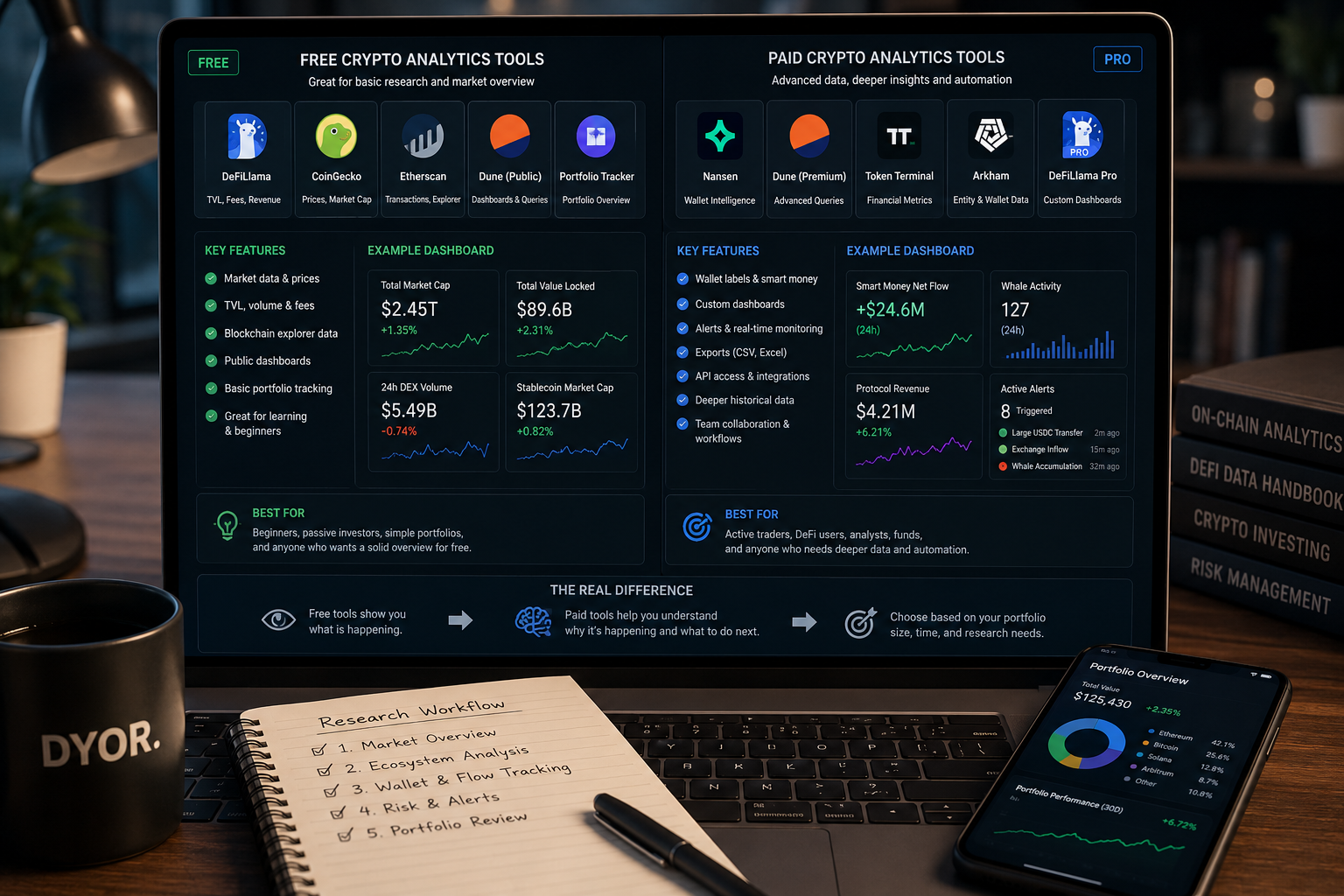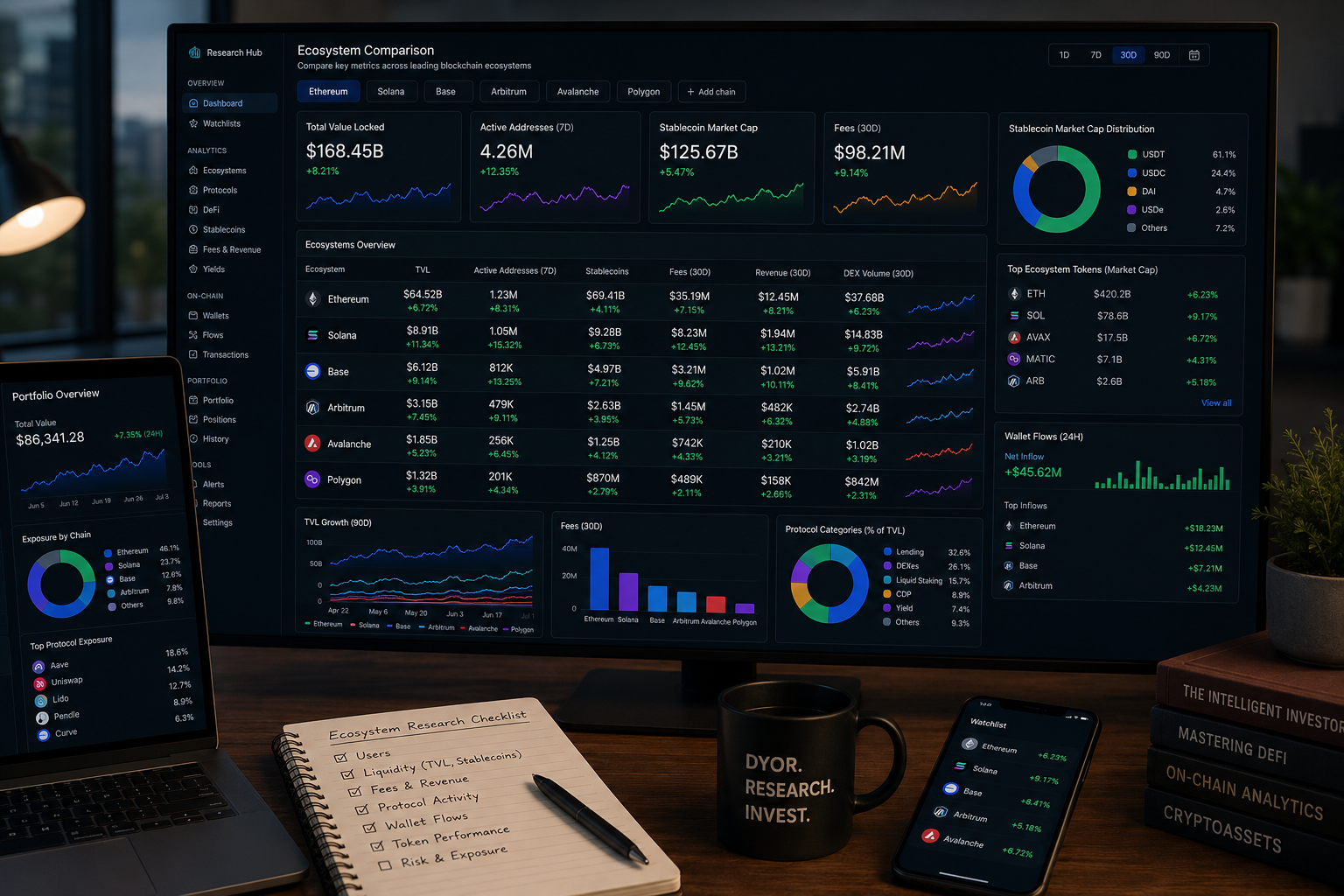
The best crypto research tools ecosystems investors use are not the ones with the most charts.
They are the tools that help answer better questions.
A blockchain ecosystem can look strong from one angle and weak from another. Token price may be rising while user activity is flat. TVL may look high while stablecoin liquidity is shallow. Transactions may increase while fees and revenue remain weak. Social attention may grow while developer activity slows down.
That is why ecosystem comparison requires more than one metric.
Investors need tools that help compare chains through users, liquidity, fees, revenue, TVL, stablecoins, wallet behavior, protocol activity, and market context.
A good crypto research workflow should help answer:
- Which ecosystems are actually growing?
- Which chains have usable liquidity?
- Are fees and revenue improving?
- Is TVL supported by real activity?
- Are stablecoins entering or leaving?
- Are users returning?
- Are developers and apps expanding?
- Are large wallets moving capital?
- Is growth broad or concentrated in one sector?
This article compares the most useful crypto research tools for ecosystem analysis, with a practical focus on how each tool helps investors compare blockchain networks more intelligently.
The goal is not to collect dashboards.
The goal is to build a clearer research process.
Table of Contents
What Crypto Research Tools for Ecosystems Should Track
Crypto research tools ecosystems investors rely on should not only show price charts.
Ecosystem analysis needs several layers.
| Research Layer | What to Compare |
|---|---|
| Users | Active addresses, transactions, returning users, new addresses. |
| Liquidity | TVL, stablecoins, DEX depth, slippage, liquidity fragmentation. |
| DeFi activity | DEX volume, lending activity, yields, protocol usage. |
| Economics | Fees, revenue, app revenue, protocol revenue, incentives. |
| Wallet flows | Whale movement, smart money, treasury flows, exchange flows. |
| Portfolio exposure | Chain allocation, protocol positions, asset concentration. |
| Developer and app growth | New protocols, app diversity, ecosystem expansion. |
| Market context | Token price, volume, market cap, volatility, liquidity quality. |
No tool covers all of this perfectly.
That is why ecosystem research works best as a stack.
One tool may show TVL and stablecoins.
Another may show fees and revenue.
Another may track wallet flows.
Another may help monitor your own exposure.
This is also why BlockCodex’s article on “Best On-Chain Analytics Tools for Beginners“ is a useful foundation before building a more advanced ecosystem comparison workflow.
Tools are only useful when the investor knows what question they are trying to answer.
1. DeFiLlama: Best Free Tool for TVL, Stablecoins, Fees, and DeFi Activity
DeFiLlama is one of the best starting points for comparing blockchain ecosystems.
It tracks TVL, revenue, fees, volume, and yields across more than 7,000 DeFi protocols on more than 500 chains. It also provides dashboards for chains, protocols, stablecoins, yields, DEX volume, fees, revenue, and other DeFi metrics.
This makes DeFiLlama useful because it helps investors compare ecosystem liquidity and activity from several angles.
Investors can use it to compare:
- Chain TVL.
- Protocol TVL.
- Stablecoin supply by chain.
- DEX volume.
- Protocol fees.
- Protocol revenue.
- Yield opportunities.
- DeFi category growth.
- Chain-level activity.
For ecosystem comparison, DeFiLlama is especially useful because it shows whether capital and activity are moving together.
A chain with rising TVL but weak fees may not be as strong as it looks.
A chain with rising DEX volume but shallow stablecoin liquidity may still face execution risk.
A chain with strong app revenue may have more meaningful activity than one driven mostly by incentives.
The limitation is interpretation.
DeFiLlama gives investors a broad map, but it does not automatically explain whether TVL is sticky, whether liquidity is deep, or whether growth is incentive-driven.
This is why DeFiLlama works best when combined with BlockCodex’s guide on “How to Tell If a Blockchain Ecosystem Is Growing“.
DeFiLlama is the foundation tool.
The analysis still needs context.
2. Artemis: Best for Chain-Level Metrics and Ecosystem Comparison
Artemis is useful for investors who want to compare ecosystems through chain-level activity.
Artemis provides crypto and stablecoin data for comparing chains, including stablecoin transaction volume and other blockchain metrics. Its chain comparison dashboard is built around standardized chain data, which makes it useful for comparing ecosystems side by side.
Artemis can help investors compare:
- Active addresses.
- Transaction activity.
- Stablecoin transfer activity.
- DEX activity.
- Chain usage.
- Ecosystem momentum.
- Cross-chain trends.
This is useful because ecosystem growth is not only about DeFi TVL.
Some chains may show stronger transaction activity. Others may show better stablecoin movement. Some may grow through consumer apps, gaming, payments, or high-frequency activity rather than only classic DeFi.
Artemis helps answer:
“Which chain is actually being used?”
That question matters.
However, activity still needs quality control. High transactions can come from bots, low-value activity, or incentive farming. Active addresses do not always equal real users. Stablecoin transfer volume may include market structure activity rather than consumer payments.
This is why Artemis should be used alongside liquidity, fees, revenue, and retention signals.
A growing chain should show more than activity.
It should show useful activity.
3. Token Terminal: Best for Fees, Revenue, and Protocol Fundamentals
Token Terminal is valuable because it translates crypto protocol activity into financial-style metrics.
It tracks fundamentals such as fees, revenue, expenses, and active users across blockchain projects. Token Terminal defines revenue as the portion of fees a project retains after supply-side participants are paid, which helps investors understand whether activity creates economic value for the protocol.
This matters for ecosystem comparison.
A blockchain may have strong usage, but if very little activity converts into fees or revenue, the economic signal may be weaker.
Token Terminal helps compare:
- Protocol fees.
- Protocol revenue.
- App-level economics.
- Active users.
- Financial statements.
- Historical fundamentals.
- Project-level economic output.
For investors comparing ecosystems, this is useful because it separates activity from monetizable demand.
A chain can attract users through incentives.
A protocol can generate volume through rewards.
A DeFi app can grow TVL without strong revenue.
A network can process transactions without meaningful economic capture.
Token Terminal helps ask:
“Are users paying for this activity?”
That is an important question for ecosystem maturity.
The limitation is that financial-style metrics are not enough alone.
Fees and revenue need to be compared with liquidity, developer activity, users, and stablecoin depth.
Token Terminal is strongest when used as the fundamentals layer inside a broader ecosystem research stack.
4. Nansen: Best for Wallet Flows, Smart Money, and On-Chain Behavior
Nansen is useful when investors want to understand wallet behavior behind ecosystem activity.
Nansen describes its platform as an on-chain intelligence tool for analyzing wallet flows, tracking key metrics, and monitoring labeled wallets, including Smart Money and whales. Its website states that it tracks more than 500 million labeled wallets in real time.
This makes Nansen useful for ecosystem comparison because capital movement often reveals more than headline metrics.
Investors can use Nansen to analyze:
- Smart money flows.
- Whale activity.
- Token accumulation.
- Exchange flows.
- Wallet labels.
- Ecosystem rotation.
- Fund behavior.
- Protocol inflows and outflows.
- Early movement into new sectors.
This matters because ecosystem growth is partly behavioral.
If large wallets are moving stablecoins into an ecosystem, that can show capital preparation. If smart money is exiting a sector while retail activity rises, the signal may be weaker. If funds rotate into multiple apps within a chain, that may support ecosystem momentum.
But wallet data must be interpreted carefully.
A transfer is not always a buy or sell signal. Wallet labels can help, but they do not remove the need for context. A fund movement may reflect custody, internal operations, market making, treasury management, or risk reduction.
For wallet interpretation, see BlockCodex’s guide on “How to Analyze Whale Activity“.
Nansen is powerful, but it should not be used as a shortcut.
It is best used to add behavioral context to ecosystem research.
5. CoinGecko: Best for Market Context Across Ecosystem Tokens
CoinGecko is not a pure on-chain analytics platform, but it is useful for ecosystem comparison because it helps investors add market context.
A blockchain ecosystem is not only its chain metrics.
It also includes tokens, categories, market caps, trading volume, exchange listings, price performance, and sector narratives.
CoinGecko helps investors compare:
- Token prices.
- Market caps.
- Trading volume.
- Token categories.
- Ecosystem pages.
- Exchange listings.
- Supply data.
- Sector performance.
- Research reports.
This matters because on-chain growth can be misleading without market context.
An ecosystem may show strong active users, but if its main assets have weak liquidity, poor exchange coverage, or extremely concentrated trading volume, the investment signal may be weaker.
CoinGecko is useful for checking:
- Which tokens represent the ecosystem.
- Whether trading volume is broad or concentrated.
- Whether liquidity exists on reliable venues.
- Whether ecosystem tokens are moving together.
- Whether market cap growth matches usage growth.
For example, comparing ecosystem tokens can help investors see whether capital is flowing into one speculative asset or across a broader application layer.
CoinGecko is best used as the market context layer.
It does not replace DeFiLlama, Artemis, or Token Terminal.
It helps investors avoid analyzing on-chain metrics without checking price, liquidity, and token market structure.
6. Arkham: Best for Entity-Level Wallet Investigation
Arkham is useful when ecosystem research requires wallet and entity investigation.
It is not the same type of tool as DeFiLlama or Artemis. It is more investigative.
Arkham helps investors explore wallets, entities, transaction flows, and labeled blockchain activity. That can be useful when studying ecosystem capital movement, treasury wallets, exchange-related flows, exploit activity, or large holder behavior.
For ecosystem comparison, Arkham can help answer:
- Which wallets are moving capital?
- Are known entities entering or exiting?
- Are exchange wallets receiving large inflows?
- Are protocol treasuries active?
- Are funds moving across chains?
- Are suspicious flows connected to a protocol?
- Is activity concentrated around a small number of entities?
This is useful during events.
For example, if an ecosystem faces a bridge incident, liquidity crisis, major unlock, exploit, whale exit, or treasury transfer, entity-level tracking becomes more important.
The limitation is that investigation does not equal conclusion.
A wallet movement needs interpretation. A transfer can represent custody, OTC movement, market making, internal rotation, bridge usage, or actual selling.
Arkham is best used when the investor has a specific wallet or event to investigate.
It is not the first tool beginners need, but it can be valuable for deeper ecosystem research.
7. De.Fi: Best for Yield Discovery and DeFi Exposure Awareness
De.Fi is useful for investors comparing ecosystem opportunities through yield, DeFi exposure, and security awareness.
It offers DeFi discovery, APY aggregation, portfolio tracking, and security-oriented tools across many protocols and chains. That makes it relevant for investors who want to compare ecosystems through the lens of where yield opportunities and DeFi positions are emerging.
De.Fi can help investors analyze:
- Yield pools.
- Vaults.
- APY opportunities.
- DeFi categories.
- Portfolio exposure.
- Chain distribution.
- Protocol opportunities.
- Risk signals.
- Wallet security checks.
This makes it useful for comparing ecosystems where capital is moving for yield.
However, yield discovery must be handled carefully.
A high APY is not automatically a good opportunity. It may reflect high risk, low liquidity, unstable reward tokens, temporary incentives, or weak exit routes.
This is why De.Fi should not be used only to find the highest yield.
It should be used as part of a risk-aware research process.
For this reason, it pairs naturally with BlockCodex’s article on “Best DeFi Risk Tools for Tracking Yield, Liquidity and Exposure“.
Yield is only useful when investors understand liquidity, protocol risk, and exit conditions.
Best Crypto Research Tools by Ecosystem Question
Different tools answer different ecosystem questions.
| Ecosystem Question | Best Tool Type | Strong Options |
| Which chains have the most DeFi liquidity? | DeFi analytics dashboard | DeFiLlama |
| Which chains have rising activity? | Chain analytics platform | Artemis |
| Which protocols generate fees and revenue? | Fundamentals dashboard | Token Terminal |
| Which wallets are moving capital? | Wallet intelligence platform | Nansen, Arkham |
| Which ecosystem tokens are gaining market attention? | Market data platform | CoinGecko |
| Where are yield opportunities emerging? | DeFi discovery platform | De.Fi, DeFiLlama |
| Where is my portfolio exposed? | Portfolio tracker | Zerion, DeBank, De.Fi |
This is the key point:
There is no single perfect ecosystem research tool.
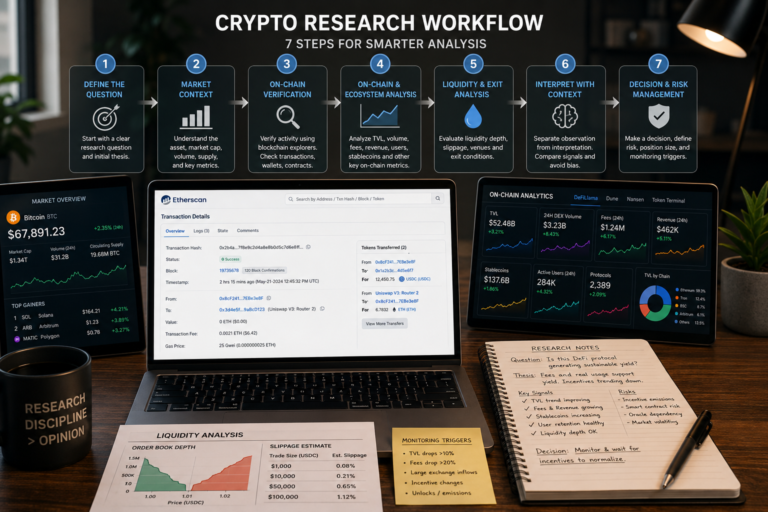
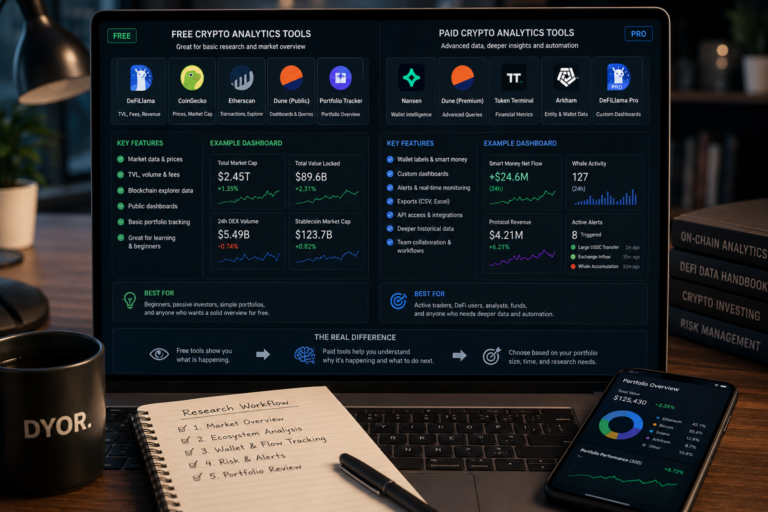
The best research comes from combining layers.
A useful stack could look like this:
- DeFiLlama for TVL, fees, revenue, stablecoins, and yields.
- Artemis for chain-level activity.
- Token Terminal for fundamentals.
- CoinGecko for market context.
- Nansen or Arkham for wallet flows.
- De.Fi for yield and exposure awareness.
- Zerion or DeBank for portfolio tracking.
That stack gives investors a clearer picture than any single dashboard.
Practical Workflow for Comparing Blockchain Ecosystems
A good ecosystem workflow should be simple enough to repeat.
Step 1: Start With the Ecosystem Map
Use DeFiLlama to check the chain’s TVL, stablecoins, DEX volume, fees, revenue, and main protocols.
Ask:
- Is liquidity growing?
- Are stablecoins increasing?
- Is activity spread across several protocols?
- Are fees and revenue meaningful?
Step 2: Check User and Transaction Activity
Use Artemis or Token Terminal to review active users, transaction activity, and chain-level usage.
Ask:
- Are users increasing?
- Is activity persistent?
- Are transactions economically meaningful?
- Is growth broad or concentrated?
Step 3: Add Market Context
Use CoinGecko to check ecosystem token performance, market cap, liquidity, exchange support, and trading volume.
Ask:
- Are ecosystem tokens liquid?
- Is activity reflected across multiple assets?
- Is volume concentrated in one token?
- Is price action disconnected from fundamentals?
Step 4: Review Protocol Economics
Use Token Terminal and DeFiLlama fees or revenue dashboards.
Ask:
- Are users paying for applications?
- Is app revenue improving?
- Are incentives masking weak demand?
- Which protocols create economic value?
Step 5: Follow Wallet Flows
Use Nansen or Arkham when wallet behavior matters.
Ask:
- Are large wallets entering or exiting?
- Are stablecoins moving into the ecosystem?
- Are funds rotating between protocols?
- Are exchange flows changing?
Step 6: Check Your Own Exposure
Use a portfolio tracker such as Zerion, DeBank, or De.Fi.
Ask:
- Which chains am I exposed to?
- Which protocols hold my capital?
- Is my exposure too concentrated?
- Can I exit if liquidity weakens?
For portfolio structure, see BlockCodex’s guide on “Best Crypto Portfolio Tracking Setups“.
Step 7: Compare Signals Together
The final step is convergence.
A blockchain ecosystem is more credible when several indicators improve together:
- Users.
- Stablecoins.
- TVL.
- Fees.
- Revenue.
- Liquidity depth.
- App diversity.
- Wallet flows.
- Developer activity.
- Market liquidity.
If only one metric looks strong, the signal is weaker.
How to Avoid Misreading Ecosystem Tools
Crypto research tools can create false confidence.
Investors often make the same mistakes.
Mistake 1: Treating TVL as Growth
TVL can rise because of price appreciation, incentives, or recycled capital.
Mistake 2: Treating Transactions as Real Users
Low-cost chains can produce high transaction counts without deep economic activity.
Mistake 3: Treating Smart Money as Always Right
Labeled wallets can help, but they are not automatic signals.
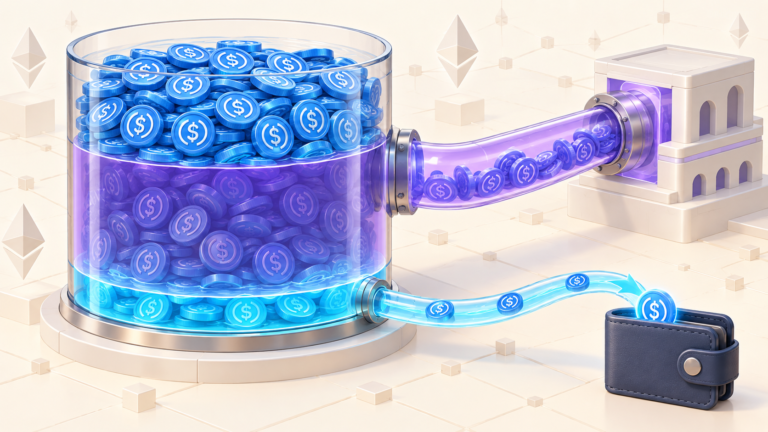
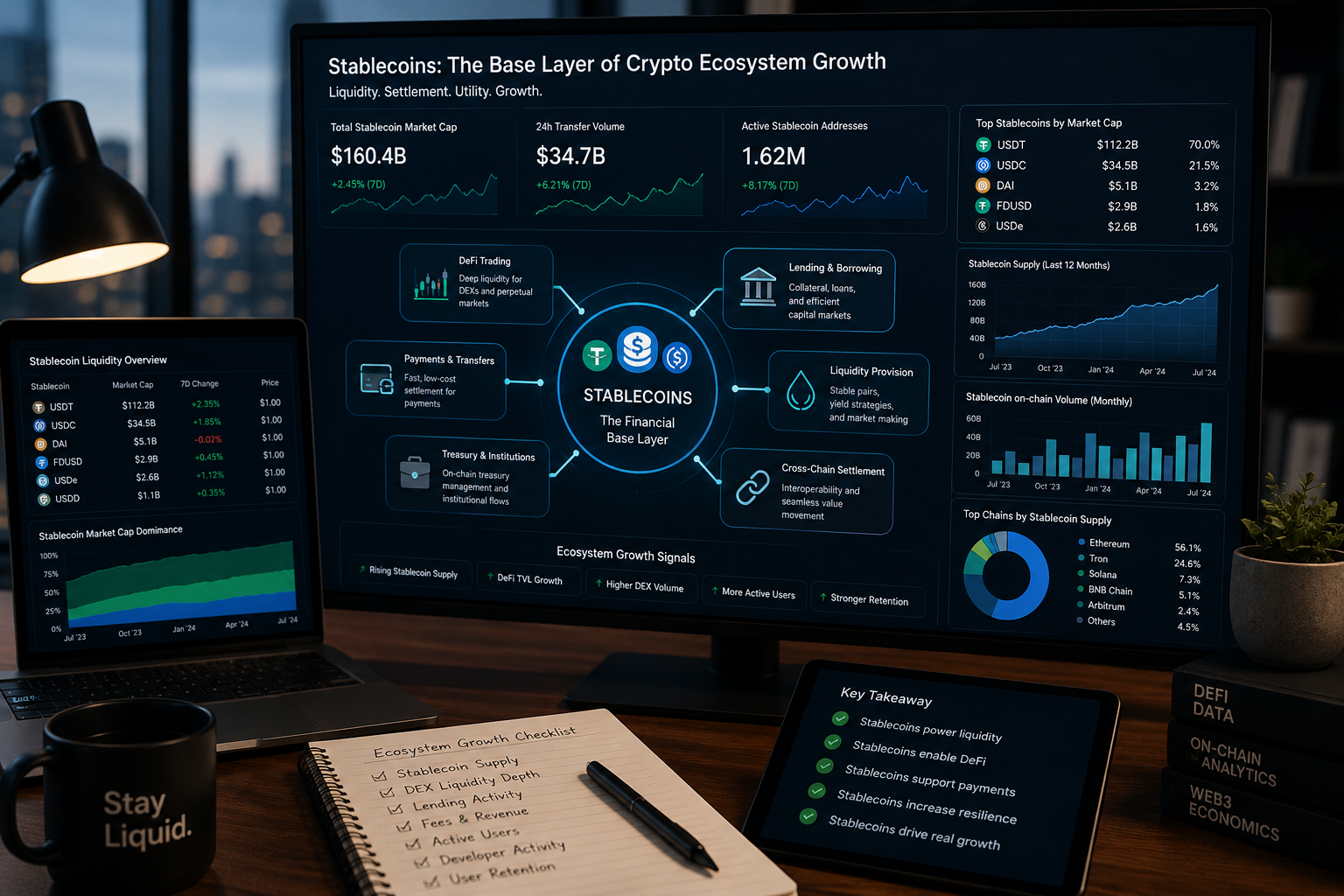
Mistake 4: Ignoring Stablecoin Liquidity
Without stablecoin depth, ecosystem activity may remain fragile.
Mistake 5: Ignoring Fees and Revenue
If users are not paying for activity, growth may depend too much on incentives.
Mistake 6: Comparing Chains Without Context
A DeFi-heavy chain, gaming chain, payments chain, and infrastructure chain may need different metrics.
Mistake 7: Using Too Many Tools Without a Question
More dashboards do not automatically improve analysis.
The tool should answer a specific research question.
Final Thoughts
The best crypto research tools ecosystems investors use are not about collecting more dashboards.
They are about building a better comparison process.
DeFiLlama helps compare liquidity, TVL, fees, revenue, stablecoins, and yields. Artemis helps track chain-level activity. Token Terminal adds fundamentals. Nansen and Arkham provide wallet intelligence. CoinGecko adds market context. De.Fi helps connect yield discovery with risk awareness. Portfolio trackers help investors understand their own exposure.
None of these tools gives a perfect answer alone.
But together, they help investors avoid simple mistakes.
A blockchain ecosystem should not be judged only by token price, TVL, transactions, or hype.
It should be judged by whether users, liquidity, stablecoins, fees, developers, applications, wallet flows, and market structure are improving together.
That is the real value of a crypto research stack.
It turns scattered data into a clearer view of ecosystem quality.