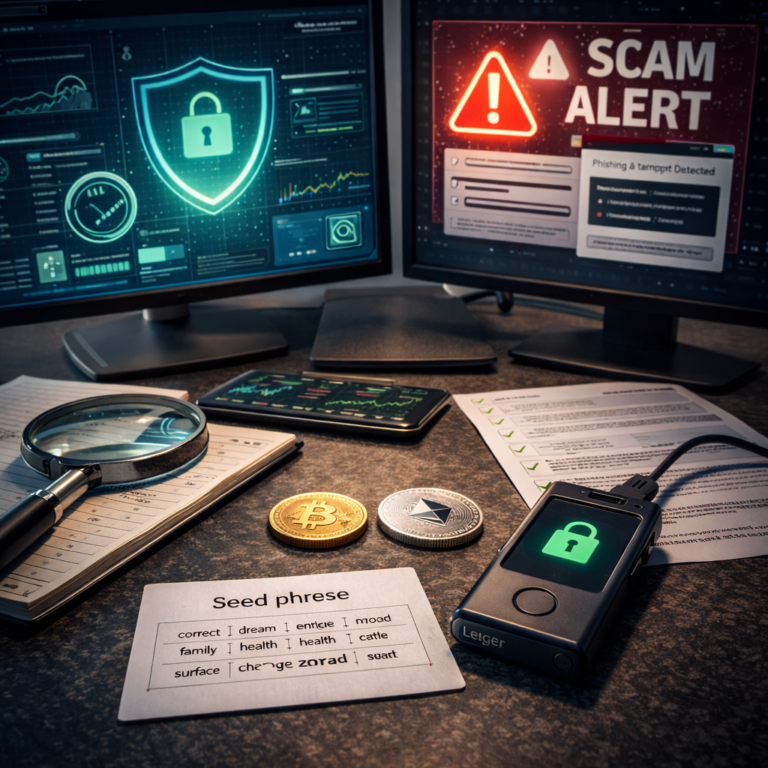
A wallet drainer in crypto is a malicious tool or scam setup designed to trick users into signing permissions or transactions that allow attackers to steal assets from their wallets.
It is one of the most dangerous scam models in Web3 because it does not always require the attacker to know your seed phrase or private key.
Instead, the victim is often manipulated into approving the attack.
That is what makes wallet drainers so effective.
A wallet drainer in crypto scam is especially dangerous because it turns a normal wallet interaction into a permission trap.
They abuse trust, urgency, fake interfaces, token approvals, and transaction signing habits. The user may believe they are claiming an airdrop, minting an NFT, connecting to a DeFi protocol, verifying eligibility, or signing a harmless message. In reality, the wallet interaction may grant the attacker permission to transfer assets.
Chainalysis describes crypto drainers as phishing tools built for the Web3 ecosystem. Instead of stealing usernames and passwords, drainers often impersonate legitimate projects, encourage victims to connect wallets, and push them into approving transactions that give attackers control over funds.
That distinction matters.
A wallet drainer crypto scam is not always a “hack” in the classic sense.
Often, the blockchain works exactly as designed.
The wallet works exactly as designed.
The user signs something dangerous.
That is why wallet drainers are mostly a security behavior problem, not only a technical problem.
Table of Contents
How a Wallet Drainer in Crypto Scam Works
Most wallet drainer crypto scams follow a simple pattern.
The attacker creates a fake opportunity, drives the victim to a malicious page, asks the victim to connect a wallet, and then presents a transaction or signature request that looks normal enough to approve.
The scam usually starts with bait.
That bait can be:
- A fake airdrop.
- A fake NFT mint.
- A fake token claim.
- A fake staking page.
- A fake support message.
- A compromised social media account.
- A malicious sponsored link.
- A fake DeFi front end.
- A phishing link shared in Telegram or Discord.
Once the user lands on the page, the site may request wallet connection. Connecting a wallet is not always dangerous by itself, but it creates the next step: transaction or signature approval.
That is where the drainer becomes dangerous.
A malicious site may ask the user to approve token spending, sign a transaction, authorize an NFT transfer, interact with a malicious contract, or sign a message that enables a harmful action.
The victim often sees a familiar wallet popup and assumes the action is safe.
But in crypto, signing is consent.
If the transaction gives permission to the wrong contract, the attacker may be able to drain tokens, NFTs, or other assets.
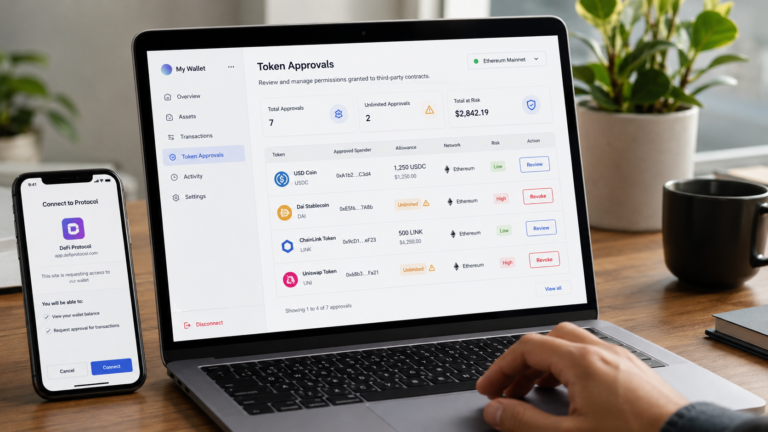
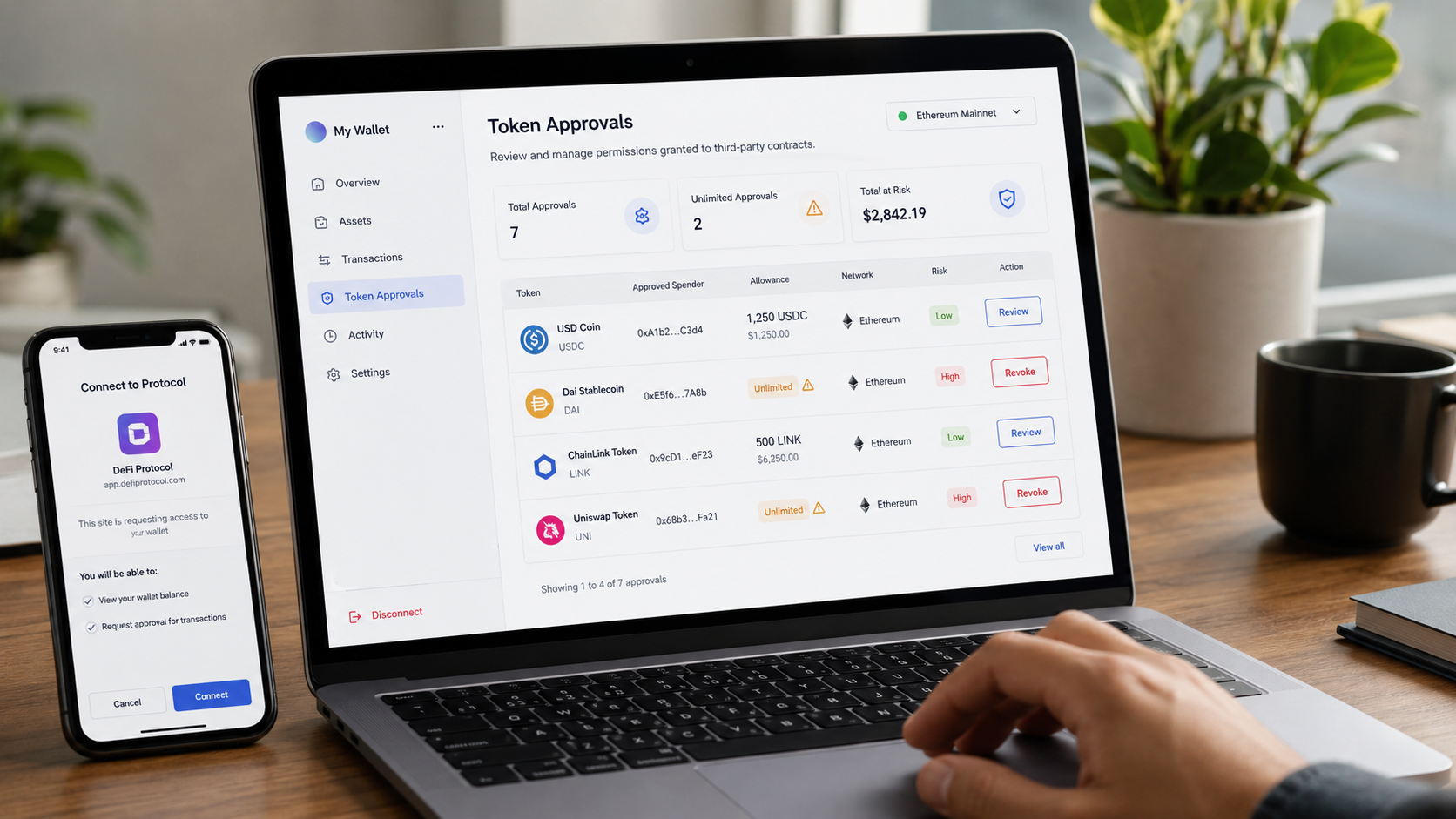
This is why BlockCodex’s guide on How to Check Token Approvals Before Using DeFi: 7 Smart Safety Steps is directly related to wallet drainer protection.
Wallet drainers often rely on users approving permissions they do not fully understand.
Why Wallet Drainers Are So Dangerous
Wallet drainers are dangerous because they exploit normal wallet behavior.
Most users are trained to click quickly.
They connect wallets regularly.
They approve transactions regularly.
They sign messages regularly.
They move between dApps regularly.
That repetition creates a habit.
Scammers exploit that habit by making malicious approvals look routine.
Wallet drainers are also dangerous because they can act quickly. Once a harmful permission or transaction is signed, assets can be moved before the user fully understands what happened.
In many cases, there is no customer support team that can reverse the transaction.
That is the harsh reality of self-custody.
Another reason drainers are effective is that they do not need to break encryption. They target the human decision layer.
This is why wallet security is broader than storing a seed phrase safely.
A hardware wallet can protect private keys, but it cannot automatically protect a user who confirms a malicious transaction. Ledger explains that token approvals are on-chain permissions users give to Web3 applications, and that these permissions carry responsibility because they allow applications to access assets for automated transactions.
For a broader protection framework, see BlockCodex’s Best Crypto Security Stack: 7 Practical Layers to Protect Digital Assets.
The key point is simple:
A secure wallet setup is not only about where your keys are stored.
It is also about what you sign.
Wallet Drainers vs Normal Token Approvals
Not every token approval is malicious.
DeFi needs approvals to function.
If you swap tokens on a decentralized exchange, provide liquidity, deposit into a vault, bridge assets, or use a lending protocol, a smart contract may need permission to interact with your tokens.
That is normal.
The problem is when approvals are excessive, unnecessary, unlimited, or granted to a malicious spender.
In many cases, a wallet drainer in crypto attack depends on users approving permissions they would reject if they understood the risk clearly.
A normal approval matches the action you intended to perform.
A suspicious approval does not.
For example:
| Situation | Lower-Risk Interpretation | Higher-Risk Interpretation |
|---|---|---|
| You approve USDC for a known DEX swap | The contract needs USDC for the swap. | The spender address is unknown or unrelated to the DEX. |
| You claim an airdrop | A signature may confirm eligibility. | The site asks permission to spend valuable tokens. |
| You mint an NFT | The transaction matches the mint action. | The wallet prompt asks for broad asset access. |
| You use a bridge | The bridge contract needs token permission. | The approval remains unlimited after the transfer. |
The key is alignment.
The approval should match the action.
If a site promises a free token but asks to spend your stablecoins, that is a serious warning sign.
Etherscan’s Token Approval Checker lets users review approvals and revoke selected permissions, with Etherscan noting that revoking approvals prevents contracts or addresses from spending assets.
Revoke.cash also explains that token approvals give dApps permission to spend tokens, and that users can revoke approvals to take back control of wallet permissions.
This is why approval hygiene is one of the strongest defenses against wallet drainers.
Common Warning Signs of a Wallet Drainer
Wallet drainer crypto scams usually create pressure.
They want the user to act quickly before checking details.
Here are the most important warning signs.
1. The Site Creates Urgency
Many wallet drainers use urgent language:
“Claim now.”
“Limited eligibility.”
“Only 10 minutes left.”
“Your wallet has been selected.”
“Verify before you lose access.”
Urgency is not proof of a scam, but it is a warning sign.
Scammers use urgency because careful users are harder to exploit.
2. The Link Comes From an Unverified Source
Many drainers spread through Telegram, Discord, X, fake support accounts, fake ads, or compromised project accounts.
Even if the post looks official, the link should be checked carefully.
A compromised account can still publish a malicious link.
3. The Domain Looks Slightly Wrong
Phishing pages often copy a real brand but use a similar-looking domain.
A single missing letter, extra dash, fake extension, or unusual subdomain can be enough to mislead users.
Before connecting a wallet, check the domain manually.
Do not rely only on the page design.
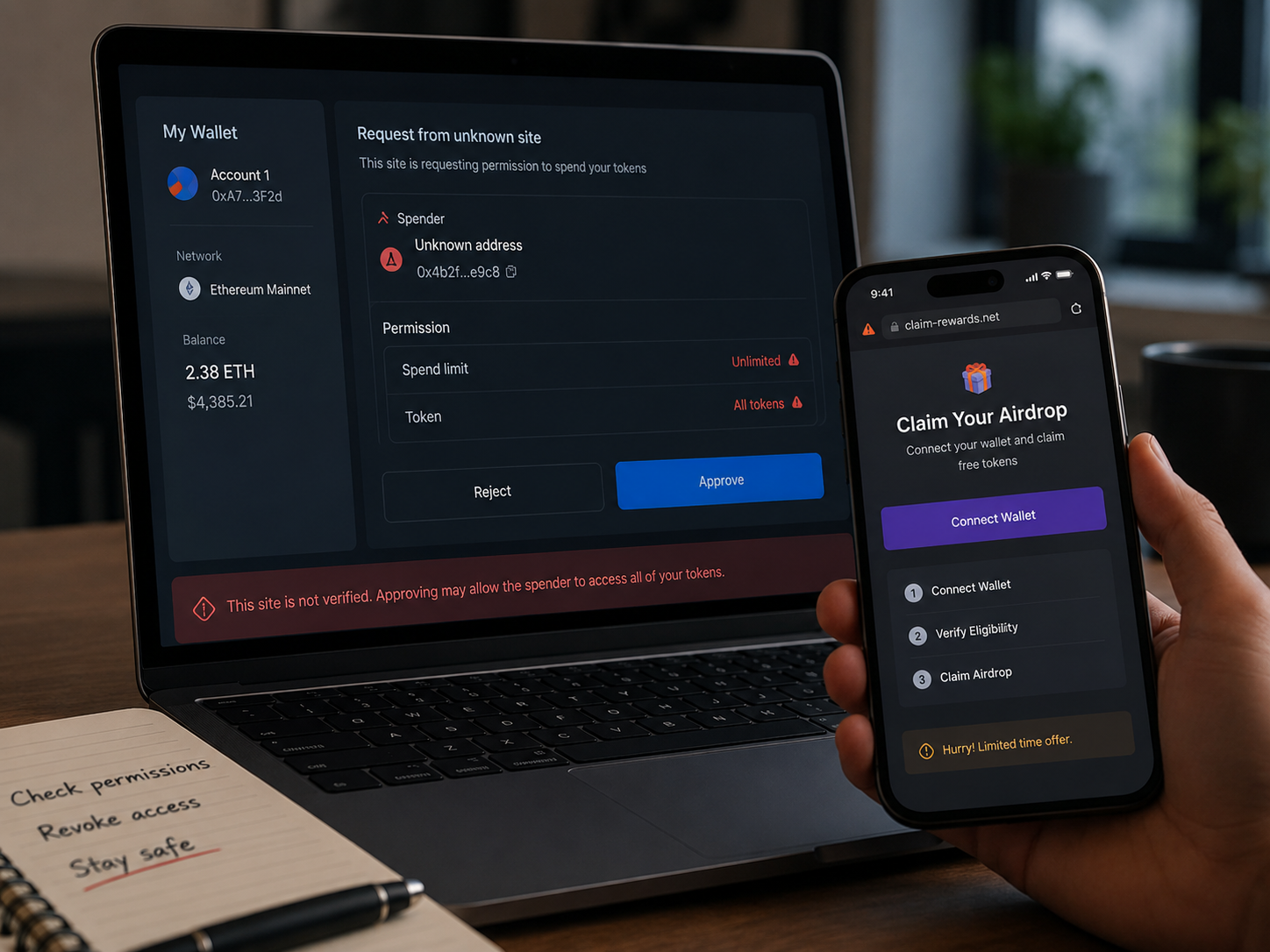
4. The Wallet Prompt Does Not Match the Action
This is one of the strongest warning signs.
If you are trying to claim an airdrop, but the wallet asks for approval to spend USDC, ETH-related tokens, NFTs, or other valuable assets, stop.
The transaction should make sense.
If it does not, do not sign.
For more airdrop-specific protection, see BlockCodex’s guide on Legit Crypto Airdrops: 7 Smart Checks Before Connecting Your Wallet.
5. The Approval Is Unlimited
Unlimited approvals are common in DeFi, but they increase risk.
If a malicious or compromised contract receives unlimited permission, the wallet can remain exposed beyond the initial interaction.
Revoke.cash explains that users can inspect approval details such as amount and spender, then revoke approvals through an on-chain transaction. It also supports approval checking across more than 100 networks.
Unlimited approvals are not always scams.
But they should always be reviewed.
6. The Project Has No Clear Verification Trail
A legitimate DeFi or airdrop page usually has a traceable path:
- Official website.
- Official social accounts.
- Verified documentation.
- Consistent contract addresses.
- Community discussion.
- Security history.
- Transparent team or protocol background.
A wallet drainer usually pushes users to act before verifying these details.
7. The Offer Looks Too Valuable for the Effort Required
Scammers often use unrealistic rewards.
A free token claim, high-value NFT mint, guaranteed yield, or exclusive allocation can push users into signing too quickly.
The more generous the offer looks, the more carefully it should be checked.
Free is often the bait.
Wallet access is the price.
The safest way to reduce wallet drainer in crypto risk is to slow down before connecting a wallet, especially when the page promises a reward, a claim, or urgent eligibility.
What To Do Before Connecting Your Wallet
Before connecting a wallet to any new site, pause and run a quick checklist.
Ask:
- Is this the official domain?
- Did I reach the site from a trusted source?
- Is the offer realistic?
- Does the project have verified social channels?
- Does the transaction match the action?
- Am I using a low-risk wallet?
- Do I need to connect my main wallet?
- Have I checked token approvals recently?
- Is this contract known or verified?
- Would I still sign this if there were no urgency?
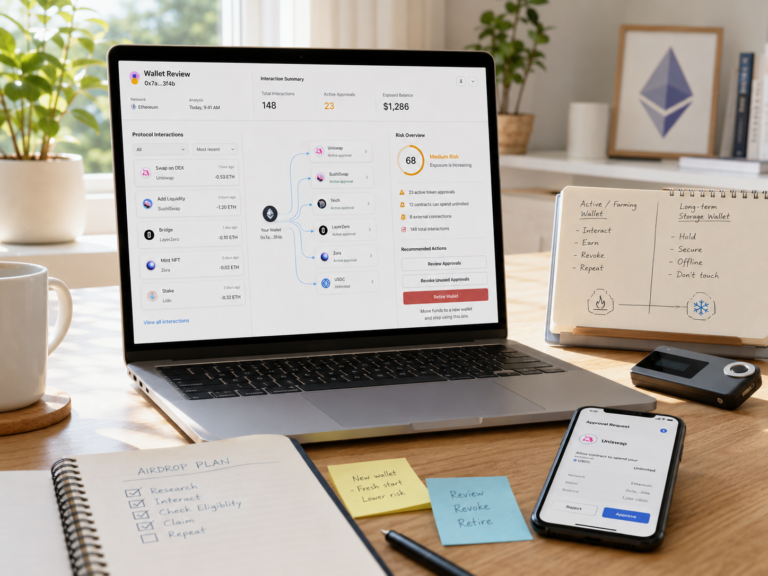
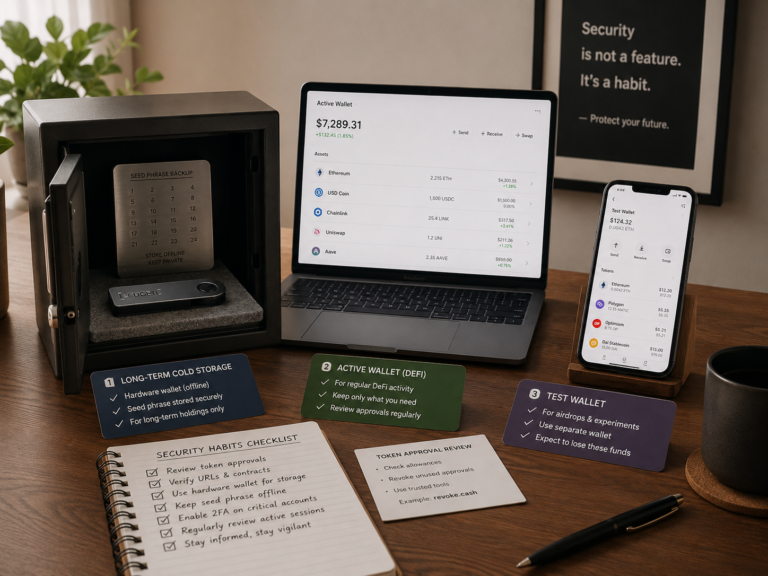
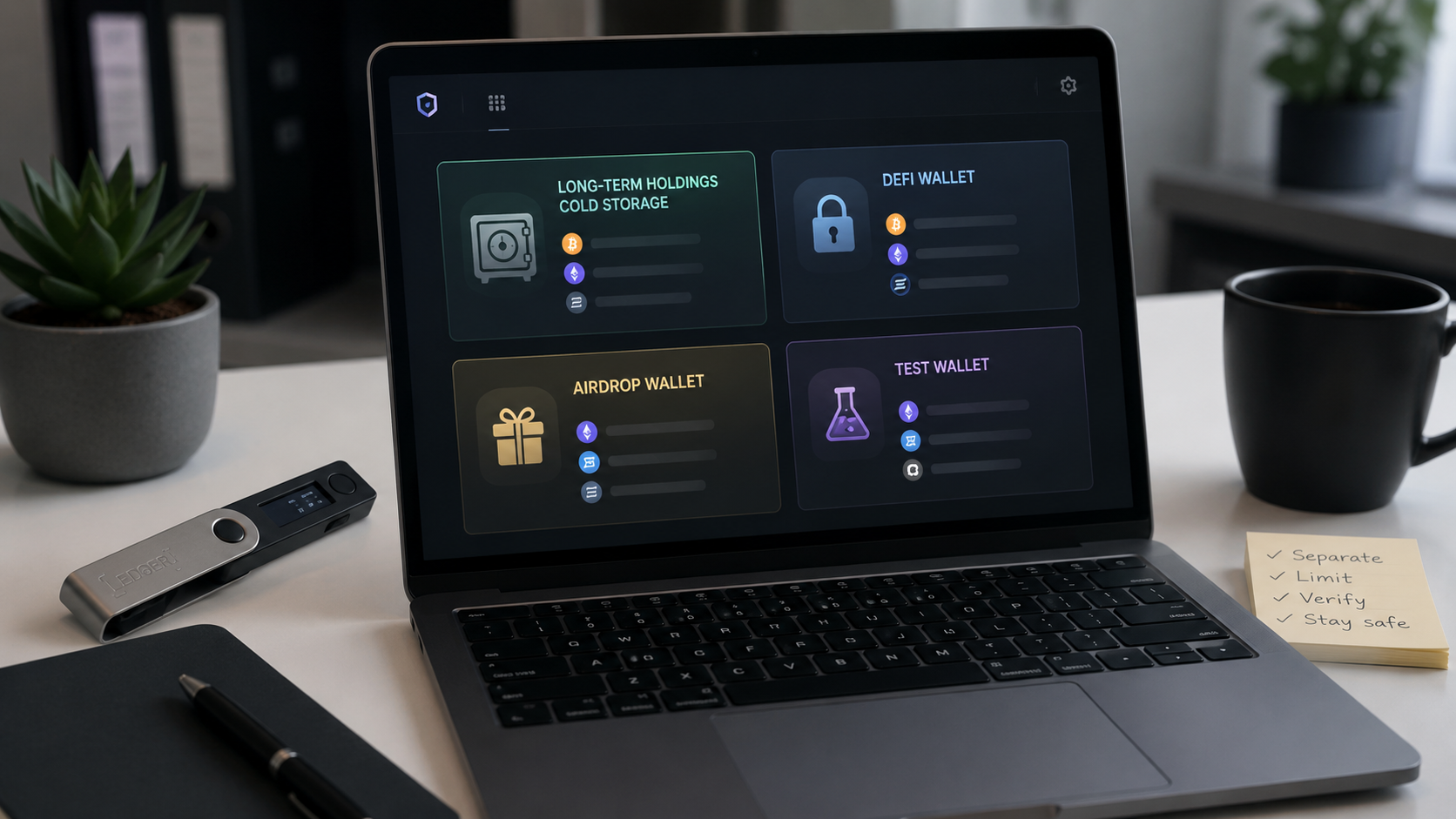
The safest habit is wallet separation.
Use one wallet for long-term holdings and another wallet for active DeFi, airdrops, mints, and experiments.
That way, if a risky interaction happens, the exposure is limited.
This is especially important for users who regularly test new protocols.
For broader examples of avoidable mistakes, BlockCodex’s article on Crypto Security Failures: 7 Human Risks Most Investors Still Ignore explains why human behavior is often the weakest layer in crypto security.
What To Do If You Signed a Suspicious Transaction
If you think you signed something dangerous, speed matters.
A practical response looks like this:
- Disconnect from the suspicious site.
- Check recent wallet transactions.
- Review token approvals.
- Revoke suspicious approvals.
- Move remaining assets to a clean wallet if needed.
- Do not interact with the same site again.
- Save transaction hashes for records.
- Report the phishing link where possible.
Revoking approvals can help prevent further damage, but it cannot recover assets that have already been moved.
This distinction is important.
If the drainer already transferred tokens, the transaction is usually irreversible. If the risk is an active approval, revoking it may stop future spending through that permission.
This is why prevention is much stronger than reaction.
How To Reduce Wallet Drainer Risk
Wallet drainer protection is mostly about habits.
A strong routine includes:
- Use a separate wallet for DeFi experiments.
- Keep long-term holdings in a cold wallet.
- Check token approvals regularly.
- Avoid signing transactions under pressure.
- Verify domains manually.
- Avoid links from random DMs.
- Treat airdrop claims with caution.
- Read wallet prompts carefully.
- Use approval tools such as Etherscan and Revoke.cash.
- Revoke unused permissions.
- Avoid unlimited approvals when possible.
- Move assets away from wallets used for risky activity.
This does not remove all risk.
But it reduces the most common failure points.
Security is not about paranoia.
It is about slowing down before irreversible actions.
Wallet Drainers and Airdrop Scams
Airdrops are one of the most common environments for wallet drainer scams.
The reason is simple: users expect to receive something for free.
That expectation lowers skepticism.
Scammers exploit this by creating fake claim pages, fake eligibility checkers, fake token allocation portals, and fake urgent deadlines.
The dangerous part is that a fake airdrop page can look almost identical to a legitimate one.
It may use the same logo, same colors, same social proof, and similar wording.
The difference appears in the wallet interaction.
A legitimate claim should not require unnecessary permission to spend unrelated assets.
If a claim page asks for broad token approvals, NFT access, or confusing contract permissions, treat it as suspicious.
This is why airdrop research should combine opportunity analysis with security checks.
Final Thoughts
A wallet drainer in crypto is dangerous because it turns normal Web3 behavior into an attack path.
It does not always need your seed phrase.
It does not always need to hack your device.
It does not always need to break the wallet.
Often, it only needs you to sign the wrong permission.
That is why wallet drainer in crypto protection depends on awareness, approval hygiene, wallet separation, and careful transaction review.
The most important lesson is simple:
Do not treat wallet popups as routine.
Every approval is a decision.
Every signature has meaning.
Every connected wallet carries risk.
Crypto security is not only about protecting private keys.
It is also about protecting your intent.