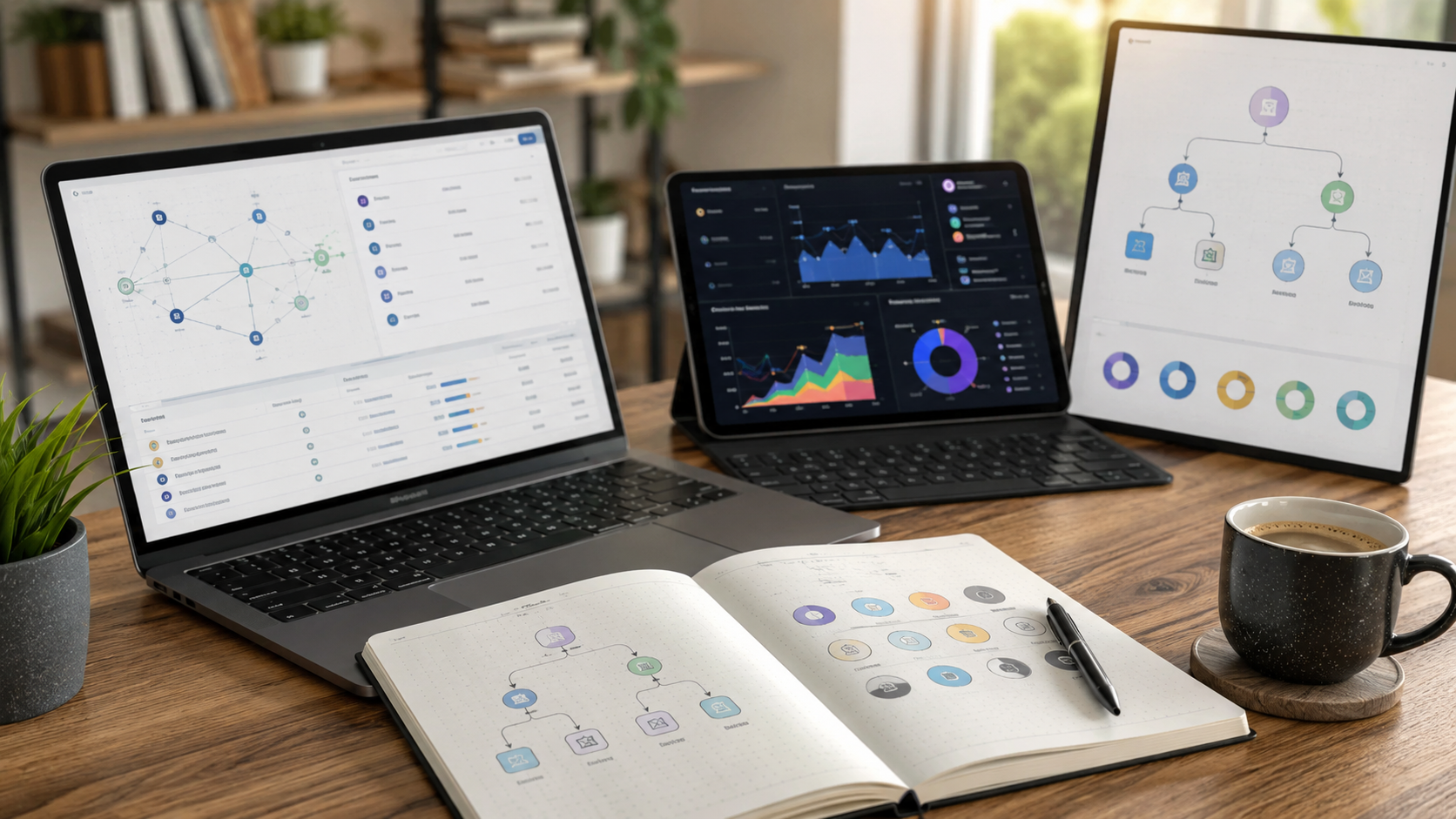
On-chain metrics are powerful because they show what happens directly on blockchains.
They can reveal wallet activity, exchange flows, token transfers, realized value, stablecoin movement, TVL, protocol fees, holder behavior, and smart contract interactions. In a market where narratives move quickly, that level of transparency is valuable.
But transparency does not automatically create understanding.
The biggest mistake investors make with on-chain metrics is treating them as isolated signals. A spike in active addresses looks bullish. A rise in exchange inflow looks bearish. A growing TVL looks like adoption. A whale withdrawal looks like accumulation.
Sometimes those interpretations are correct.
Often, they are incomplete.
On-chain data tells investors what happened. Market context helps explain why it may matter.
That difference is critical.
A metric can be accurate at the raw data level and still lead to the wrong conclusion if investors ignore liquidity, price action, incentives, market structure, derivatives positioning, stablecoin flows, or user behavior.
The edge is not just seeing the data.
The edge is knowing when the data actually matters.
Table of Contents
What Market Context Means in On-Chain Analysis
Market context means the conditions surrounding an on-chain signal.
It includes price trend, liquidity depth, exchange order books, stablecoin availability, derivatives leverage, token unlocks, protocol incentives, market cycle phase, user retention, fees, revenue, and broader risk appetite.
Without this context, on-chain metrics become easy to overread.
For example, exchange inflow can suggest potential sell-side pressure. But its meaning changes depending on whether the inflow goes to a spot exchange, a derivatives venue, or a stablecoin pair. CryptoQuant defines exchange inflow as coins deposited into exchange wallets, exchange outflow as coins withdrawn, and netflow as inflow minus outflow. That definition is useful, but the interpretation still depends on market conditions.
A BTC inflow to a spot exchange may signal potential selling.
A stablecoin inflow may signal available buying liquidity.
A derivatives inflow may signal leverage and volatility.
Same category of metric. Different market meaning.
That is why context matters.
Why Raw On-Chain Metrics Can Mislead Investors
Raw blockchain data can feel more reliable than social media narratives because it is visible and timestamped. A transaction happened or it did not. A wallet moved funds or it did not. A contract was interacted with or it was not.
The problem is not the data.
The problem is the conclusion investors attach to it.
A large wallet transfer does not automatically mean selling. Rising active addresses do not automatically mean adoption. Higher TVL does not automatically mean capital conviction. Rising stablecoin supply does not automatically mean immediate buying pressure.
Glassnode’s MVRV documentation shows why even high-quality metrics require interpretation. MVRV compares market capitalization with realized capitalization and is used to study aggregate investor behavior as price moves relative to cost basis. But it is not a simple standalone buy-or-sell signal.
This is the core principle:
On-chain metrics reduce uncertainty. They do not remove judgment.
If investors treat metrics like automatic predictions, they often misread the market.
For a broader breakdown of this mistake, see BlockCodex’s article “On-Chain Data: 7 Critical Reasons Most Investors Misread Blockchain Signals.”
Active Addresses Need User Context
Active addresses are often used as a proxy for network usage.
At first glance, this makes sense. If more addresses interact with a chain, the network appears more active.
But addresses are not the same as users.
One user can control several addresses. Bots can generate thousands of transactions. Airdrop campaigns can create temporary wallet activity. Exchanges and bridges can produce operational movements that inflate visible activity.
This is why active addresses need user context.
Better questions include:
- Are users returning over time?
- Are wallets newly created or established?
- Is activity concentrated in one application?
- Are transactions economically meaningful?
- Are fees or revenue increasing with activity?
- Is activity still present after incentives fade?
A chain with rising active addresses but weak retention may be experiencing campaign-driven activity, not durable adoption.
This is why BlockCodex’s guide “What On-Chain Activity Really Tells Us About Network Usage” separates activity from meaningful user behavior.
The key insight is simple: Activity is not adoption until behavior becomes repeatable.
TVL Needs Capital Quality Context
TVL is one of the most widely quoted DeFi metrics.
It measures the value of assets deposited in protocols. But investors often read TVL as trust, which can be dangerous.
DeFiLlama tracks TVL, revenue, fees, volume, and yields across thousands of DeFi protocols and hundreds of chains, which makes it useful for observing broad DeFi activity.
That scale is useful, but TVL still needs context.
TVL can rise because:
- Token prices increased;
- Incentives attracted liquidity;
- Stablecoins moved into a protocol;
- Capital was recursively reused;
- Large wallets temporarily parked assets;
- Leveraged looping inflated deposits.
A 2025 academic paper on TVL verifiability studied 939 Ethereum DeFi projects and noted that TVL computation is not always standardized or easily independently verifiable. In a case study of 400 protocols, its verifiable TVL estimates aligned with published figures for 46.5% of protocols.
That does not mean TVL is useless.
It means investors should ask better questions:
- Is TVL growing because of price or deposits?
- Is liquidity incentive-driven?
- Is the capital sticky?
- Does TVL convert into fees or volume?
- Is liquidity concentrated in one pool?
- Can users exit without heavy slippage?
This is the same logic developed in BlockCodex’s guide “How to Read TVL in Crypto: What It Really Signals About Capital and Risk.”
TVL becomes meaningful when it is connected to capital quality.
Exchange Flows Need Liquidity Context
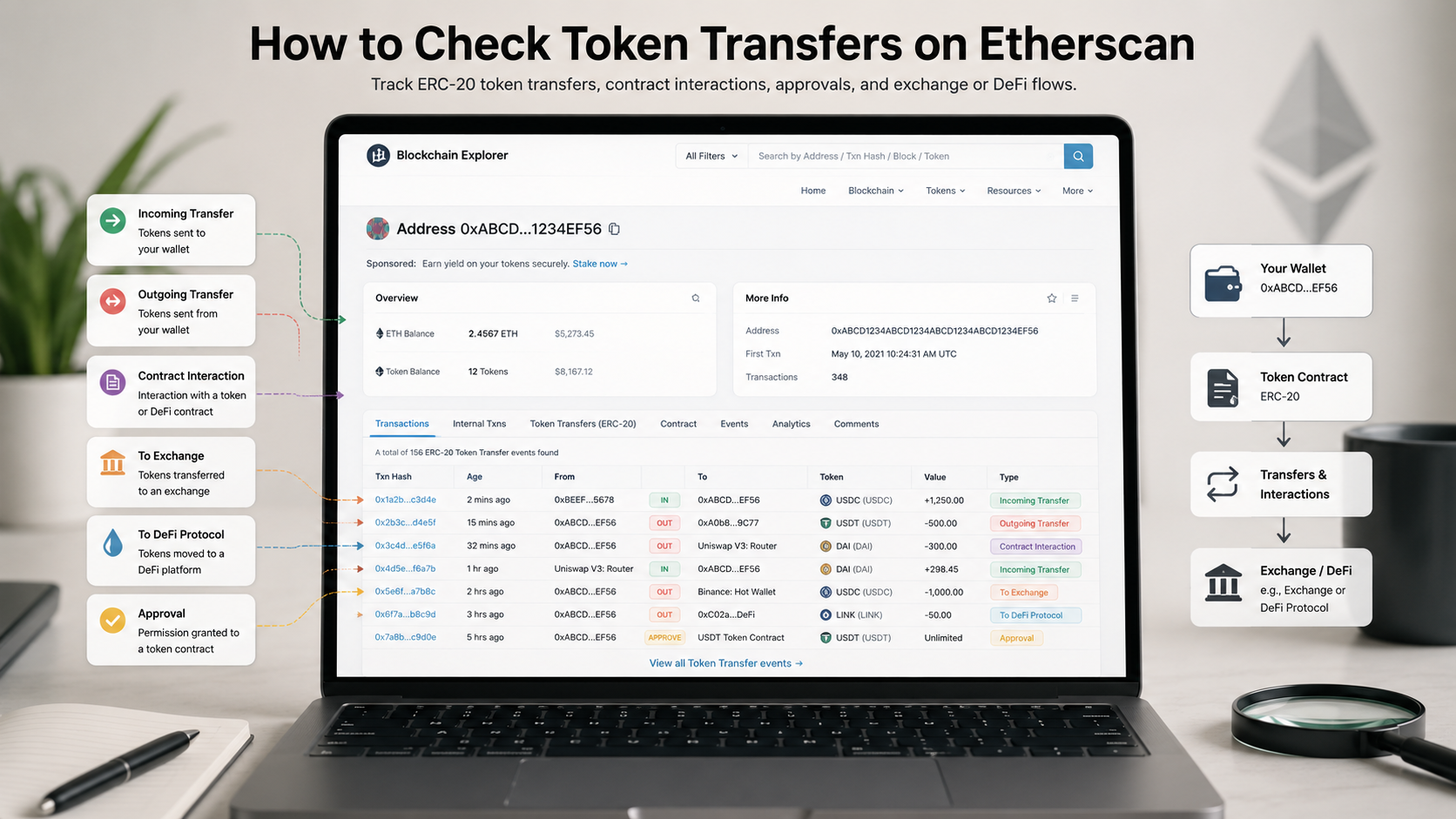
Exchange flows are among the most watched on-chain metrics.
They help investors see whether assets are moving toward or away from exchange wallets. But exchange flows are often misread because investors treat them as direct price signals.
A rise in exchange inflow may suggest potential selling pressure, but it does not prove selling happened. A rise in exchange outflow may suggest self-custody or accumulation, but it can also reflect custody migration or internal movement.
The missing layer is liquidity.
A large inflow during deep liquidity may have little market impact. The same inflow during weak order book depth can create greater downside risk.
Investors should combine exchange flows with spot liquidity, order book depth, stablecoin flows, bid-ask spreads, derivatives open interest, price reaction, and wallet identity.
This is why BlockCodex’s article “Exchange Inflow in Crypto: A Critical Signal Investors Should Understand” treats inflow as a context signal, not a direct prediction.
The most useful question is not:
“Did coins move to an exchange?”
It is:
“Can the market absorb the potential supply?”
Stablecoin Metrics Need Purpose Context
Stablecoins are often interpreted as “dry powder” waiting to buy crypto assets.
Sometimes that is true.
But stablecoins are now much more than sidelined speculative capital. They are used for trading, payments, settlement, DeFi collateral, treasury management, cross-border transfers, and market making.
CoinGecko’s 2025 Annual Crypto Industry Report reported that stablecoin market cap increased by $102.1 billion, or 48.9%, reaching $311.0 billion in 2025.
That number shows how important stablecoins have become, but it does not tell investors how that liquidity will be used.
Stablecoin growth can mean:
- More buying power on exchanges;
- More settlement activity;
- More DeFi collateral;
- More demand for payments;
- More market maker inventory;
- More defensive liquidity parking.
So stablecoin data needs purpose context.
A stablecoin inflow to an exchange may support buying pressure. Stablecoins sitting in DeFi may support lending or liquidity pools. Stablecoins circulating across chains may reflect payments, bridge activity, or settlement.
The signal becomes stronger only when stablecoin movement aligns with other signals, such as spot demand, lower sell pressure, rising volume quality, or improving liquidity depth.
Stablecoins are not one signal.
They are part of the market’s liquidity plumbing.
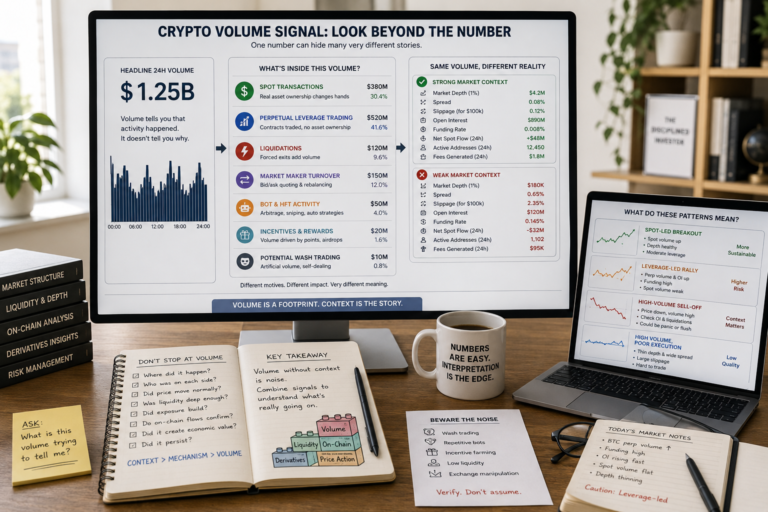
Volume Needs Execution Context
Volume is another metric investors often trust too quickly.
High volume can suggest strong demand, but it can also come from arbitrage, wash trading, market makers, incentives, or short-term speculation.
Volume alone does not reveal execution quality.
Investors need to check:
- Order book depth;
- Slippage;
- Real liquidity;
- Venue quality;
- Spot versus derivatives mix;
- Fees generated;
- Whether users return;
- Whether volume persists without incentives.
This is why BlockCodex’s article “Fake Volume in Crypto: 7 Powerful Signals Investors Should Watch” focuses on the difference between headline activity and usable liquidity.
The core idea is simple: Volume shows activity. Liquidity shows whether that activity can absorb real trades.
Without execution context, volume can become a vanity metric.
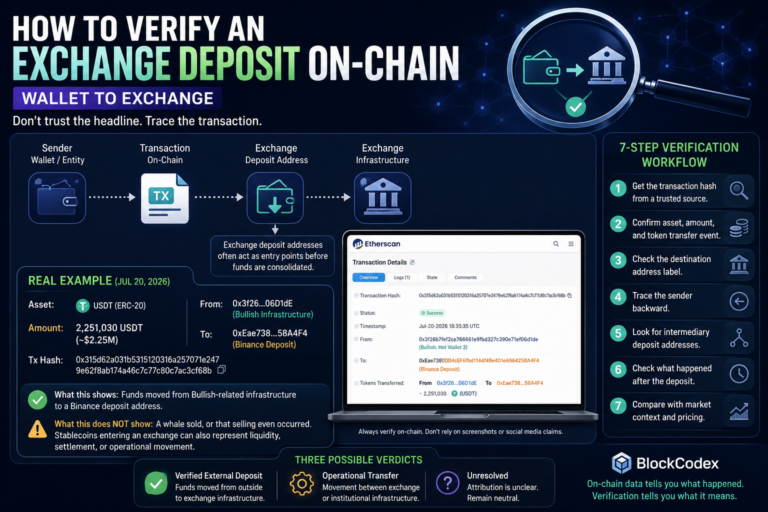
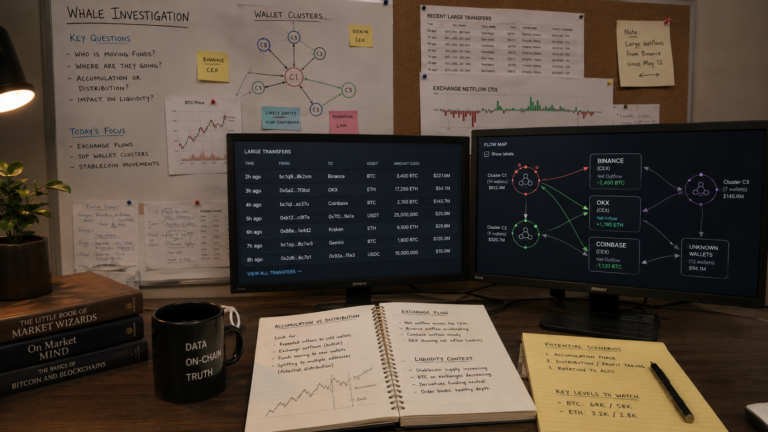
Whale Activity Needs Wallet and Market Context
Whale activity attracts attention because large wallets can influence supply, liquidity, and sentiment.
But whale movements are often overinterpreted.
A large transfer can mean selling preparation, custody restructuring, OTC settlement, internal exchange movement, market making, collateral management, DeFi allocation, or treasury operations.
That is why whale activity needs both wallet context and market context.
A whale deposit to an exchange matters more when:
- The wallet has a history of selling after deposits;
- The receiving exchange is a liquid spot venue;
- Other large wallets are moving too;
- Liquidity is weakening;
- Price fails to absorb supply;
- The movement happens around token unlocks or major catalysts.
A whale withdrawal may suggest accumulation, but it may also be custody migration.
This is why BlockCodex’s guide “How to Analyze Whale Activity: 7 On-Chain Signals Investors Should Track” focuses on patterns, wallet labels, exchange flows, and liquidity instead of isolated alerts.
A whale transaction is a clue.
It is not a full conclusion.
Why Metrics Become Stronger When They Converge
No single on-chain metric should carry the whole analysis.
The strongest signals usually come from convergence.
A bullish interpretation becomes more credible when exchange reserves decline, stablecoin liquidity improves, spot demand strengthens, active users retain, fees rise with usage, whale selling pressure weakens, and price confirms accumulation.
A bearish interpretation becomes more credible when exchange inflows rise, liquidity thins, whale balances decline, incentives fade, TVL becomes unstable, active users drop, stablecoins leave the ecosystem, and price fails to absorb supply.
The point is not to find perfect certainty.
The point is to avoid overreacting to isolated data.
A single metric is a clue.
A cluster of aligned metrics becomes a stronger signal.
Practical Framework: How to Add Market Context to On-Chain Metrics
A simple framework can prevent most misreadings.
1. Define the metric
Before interpreting a metric, ask what it actually measures.
Does it count addresses, users, coins, value, transfers, liquidity, or contract interactions?
2. Identify the actor
Who is involved?
Retail wallets, whales, exchanges, smart contracts, market makers, bridges, protocols, funds, or bots?
3. Check the direction
Where is value moving?
Toward exchanges, away from exchanges, into DeFi, into cold storage, into stablecoins, or across chains?
4. Add liquidity context
Can the market absorb the movement?
Check depth, spreads, slippage, stablecoin liquidity, and execution venues.
5. Compare with price behavior
Does price confirm the interpretation?
If inflows rise but price holds, buyers may be absorbing supply. If activity rises but price and fees do not respond, the signal may be weak.
6. Look for persistence
Is the signal temporary or repeated?
Sustainable signals last beyond one spike.
7. Check for incentives or artificial activity
Is the metric affected by airdrops, points programs, bots, wash trading, or liquidity mining?
This framework turns raw metrics into analysis.
Conclusion
On-chain metrics are among the most useful tools in crypto analysis, but they are not self-explanatory.
They show visible behavior: transactions, balances, flows, transfers, deposits, withdrawals, TVL, volume, and wallet movements. But they do not automatically explain intent, quality, durability, or price impact.
That is why market context matters.
Active addresses need user retention context. TVL needs capital quality context. Exchange flows need liquidity context. Stablecoins need purpose context. Volume needs execution context. Whale activity needs wallet identity and market depth.
The mistake is using on-chain data as a shortcut.
The better approach is to use it as evidence.
When investors combine blockchain data with liquidity, market structure, price behavior, incentives, and user behavior, on-chain metrics become far more useful.
The real edge is not seeing more data.
It is asking better questions before trusting the signal.