The debate around solana vs ethereum is often reduced to speed and transaction fees. However, the real distinction lies deeper — in how each ecosystem grows, attracts capital, and sustains long-term activity.
This analysis goes beyond surface-level comparisons by focusing on real ecosystem dynamics, including developer activity, liquidity, and on-chain behavior.
Real Data Comparison (2026)
| Metric | Ethereum | Solana |
|---|---|---|
| Total Value Locked (TVL) | Higher (dominant in DeFi) | Lower but growing |
| Transaction Speed | Moderate (L2 scaling) | Very high (base layer) |
| Fees | Higher | Very low |
| Active Users | Stable, institutional | High retail activity |
| Developer Ecosystem | Mature | Fast-growing |
| Network Model | Modular | Monolithic |
👉 These structural differences explain why both ecosystems evolve in fundamentally different ways.
How to Use This Solana vs Ethereum Comparison
This solana vs ethereum comparison helps clarify how different ecosystem structures impact long-term growth.
Instead of focusing only on price or hype, understanding these structural differences allows:
- better investment decisions
- more informed analysis
- clearer identification of long-term trends
Developer Activity and Ecosystem Expansion
Developer activity remains one of the strongest indicators of long-term growth.
Ethereum
Ethereum maintains a dominant position due to:
- a large open-source community
- mature tooling infrastructure
- standardized smart contract frameworks
These factors create strong network effects that reinforce ecosystem stability.
Solana
Solana has seen rapid developer onboarding, especially during growth cycles:
- high-performance environment
- increasing number of applications
- strong ecosystem experimentation
However, developer retention over time remains a key variable.
On-Chain Activity and User Behavior
On-chain data reveals how users actually interact with each network.
Ethereum
- high-value transactions
- strong DeFi and institutional usage
- lower frequency but higher capital intensity
Solana
- very high transaction volume
- low-cost interactions
- strong retail and consumer application usage
👉 This reflects a volume-driven vs value-driven ecosystem dynamic.
Capital Allocation and Liquidity Dynamics
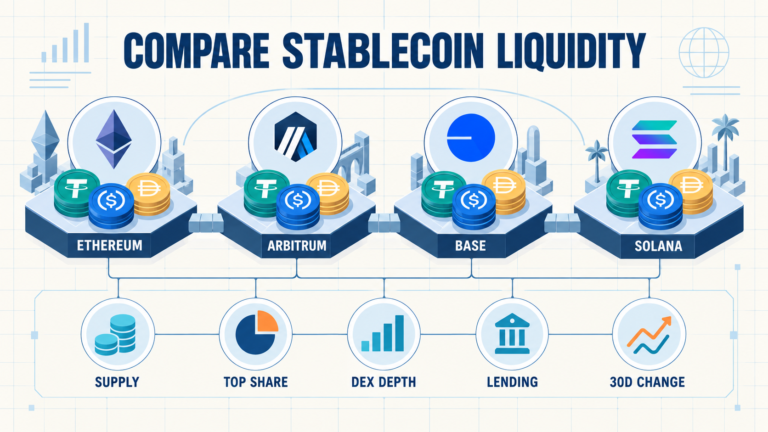
Liquidity plays a central role in ecosystem strength.
Ethereum
Ethereum continues to dominate:
- total value locked (TVL)
- stablecoin liquidity
- institutional capital inflows
This creates a deep and resilient financial layer.
Solana
Solana shows:
- rapid liquidity inflows during growth phases
- higher volatility in capital distribution
👉 This results in a more dynamic but less stable liquidity structure.
Solana vs Ethereum: Infrastructure and Scalability Models
The architectural difference is fundamental in the solana vs ethereum comparison.
Ethereum
- modular roadmap (Layer 2 scaling)
- strong decentralization focus
- gradual scalability improvements
Solana
- monolithic architecture
- high throughput at base layer
- optimized for speed and low fees
👉 Each model introduces different trade-offs between performance and resilience.
Investor Insight: Which Ecosystem Has the Stronger Growth Potential?
Instead of asking which blockchain is “better,” it is more useful to understand how they differ:
- Ethereum → stability, institutional adoption, deep liquidity
- Solana → speed, accessibility, rapid user growth
👉 For investors and builders:
- Ethereum offers long-term structural strength
- Solana offers high-growth potential but higher volatility
Analytical Tools for Ecosystem Tracking
To properly evaluate ecosystem growth, tools like Nansen provide valuable insights.
They allow users to:
- track capital flows
- analyze wallet behavior
- identify emerging ecosystem trends
Advanced Insight: Growth vs Sustainability
A key distinction in the solana vs ethereum debate is:
- rapid growth ≠ long-term sustainability
- slower growth can reflect stronger foundations
Ethereum’s ecosystem demonstrates resilience over time, while Solana highlights how fast ecosystems can expand under favorable conditions.
Conclusion
The solana vs ethereum comparison reveals two fundamentally different models of ecosystem growth.
- Ethereum prioritizes long-term stability and institutional integration
- Solana focuses on performance and rapid user adoption
Understanding these dynamics provides a more accurate framework for evaluating blockchain ecosystems beyond price speculation.
Further Reading
For a deeper analysis of on-chain data, see our guide:
👉 7 Best Crypto Analytics Tools That Reveal Powerful On-Chain Truths
FAQ
Is Solana growing faster than Ethereum?
In some periods, Solana shows faster user growth, but this does not necessarily translate into long-term dominance.
Why does Ethereum have more liquidity?
Due to early adoption, strong DeFi infrastructure, and institutional integration.
Can both ecosystems coexist?
Yes. They serve different use cases and are likely to evolve in parallel.