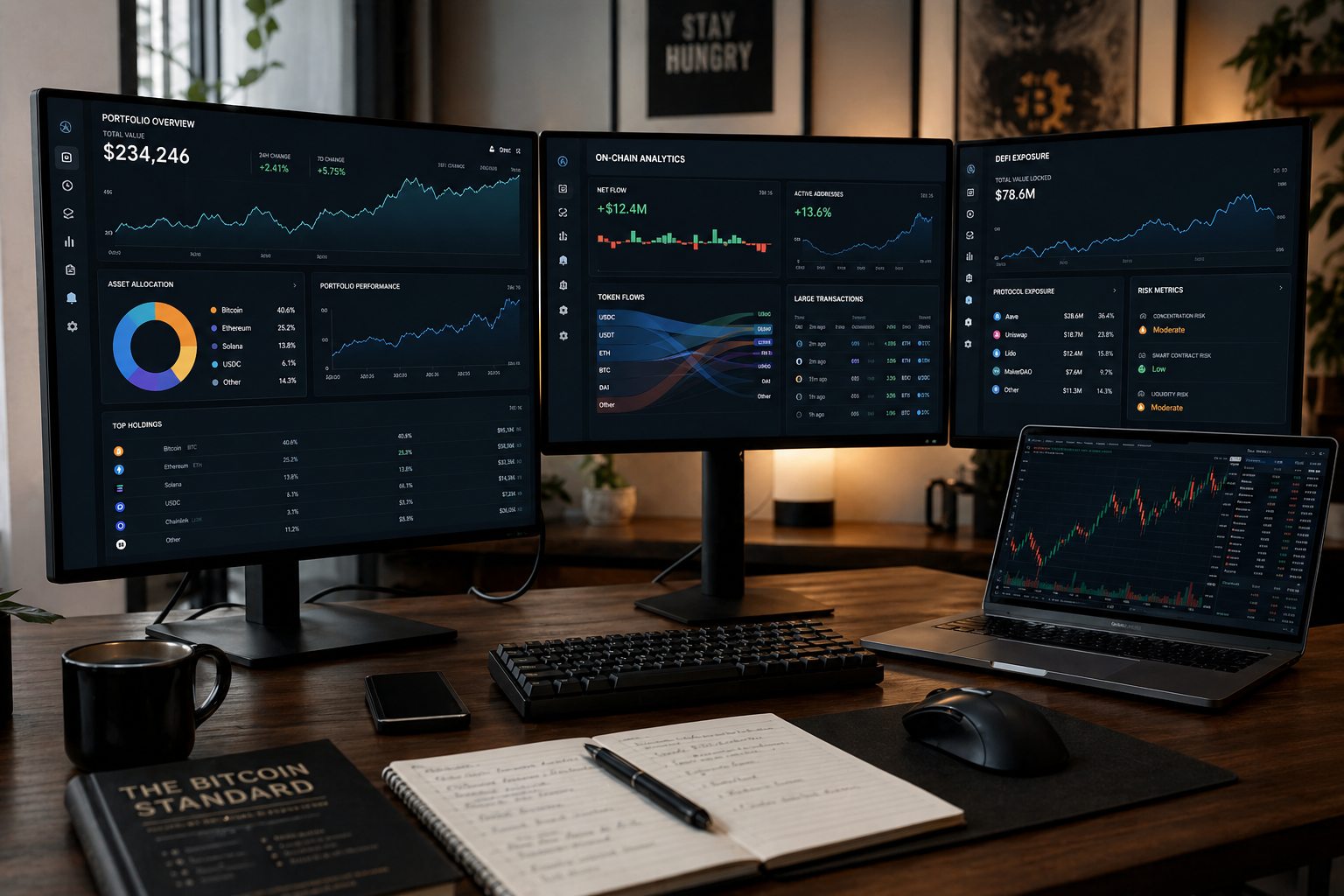
Tracking a crypto portfolio is not just about knowing your balance. It’s about understanding where risk sits, how capital is allocated, and how it evolves over time.
Most investors rely on a single dashboard. That approach breaks quickly as portfolios become more complex—across chains, wallets, and protocols.
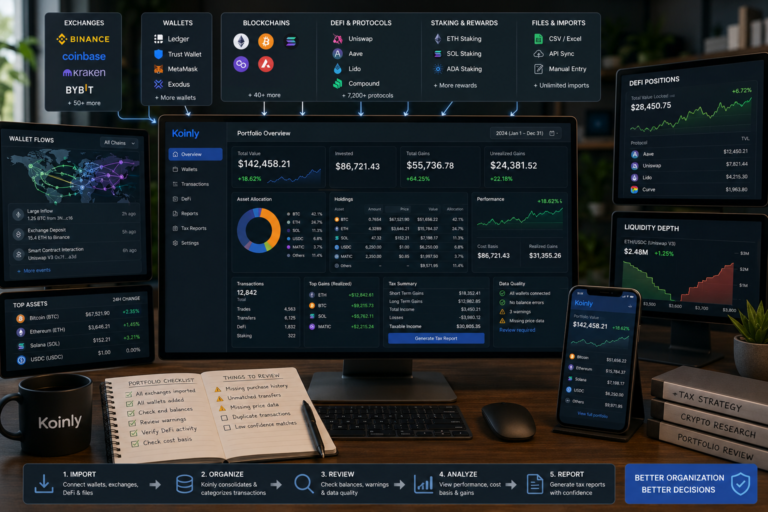
The best crypto portfolio tracking setups are not defined by a single tool, but by how different layers of data are combined: wallets, exchanges, DeFi positions, and on-chain activity.
Table of Contents
Why Basic Portfolio Tracking Becomes Misleading
At first glance, portfolio tracking seems straightforward: aggregate balances and calculate value.
But crypto introduces structural distortions:
- assets locked in smart contracts
- yield that depends on incentives
- cross-chain fragmentation
- delayed or conditional liquidity
Research from Chainalysis shows that DeFi activity is heavily concentrated in developed markets with established crypto infrastructure, rather than uniformly distributed across users globally.
Additionally, DeFi usage is measured through on-chain transaction flows, including retail-sized transactions under $10,000, highlighting how participation varies between institutional and individual actors.
👉 Insight: adoption is not homogeneous — capital in DeFi often reflects professional and institutional activity, which impacts how liquidity behaves under stress.
The Core Layers of a Robust Tracking Setup
A reliable setup must combine multiple data sources instead of relying on a single interface.
1. Wallet-Level Tracking (Foundation Layer)
Everything starts with wallet visibility.
Without it, investors cannot track:
- capital distribution
- exposure concentration
- asset movement
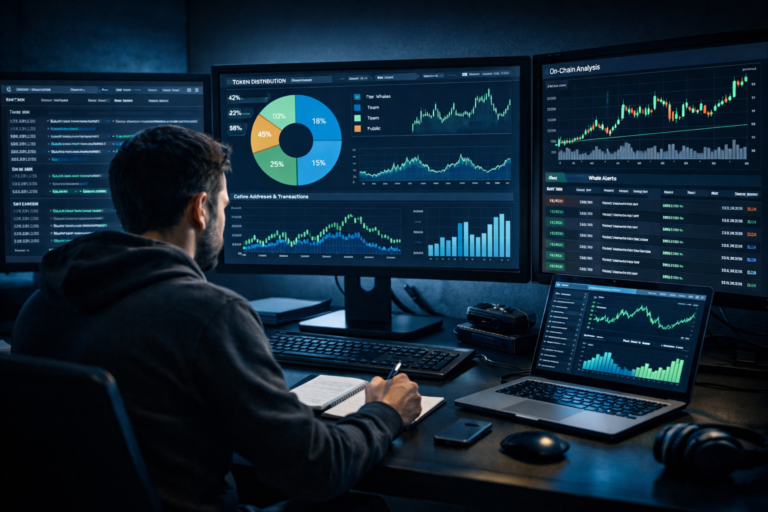
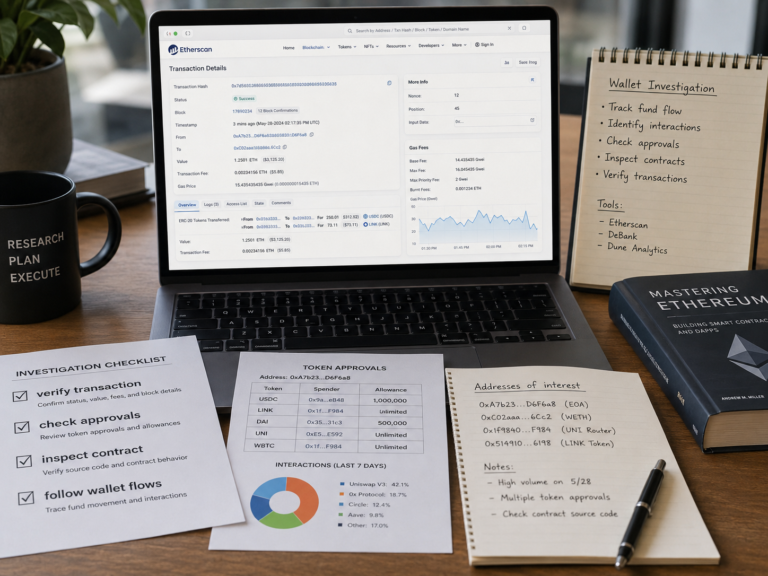
On-chain tools provide direct insight into wallet behavior, which is often more reliable than aggregated dashboards.
2. Exchange Data Integration
Centralized exchanges remain a major part of most portfolios.
Tracking here requires:
- API integrations
- trade history aggregation
- fee and PnL tracking
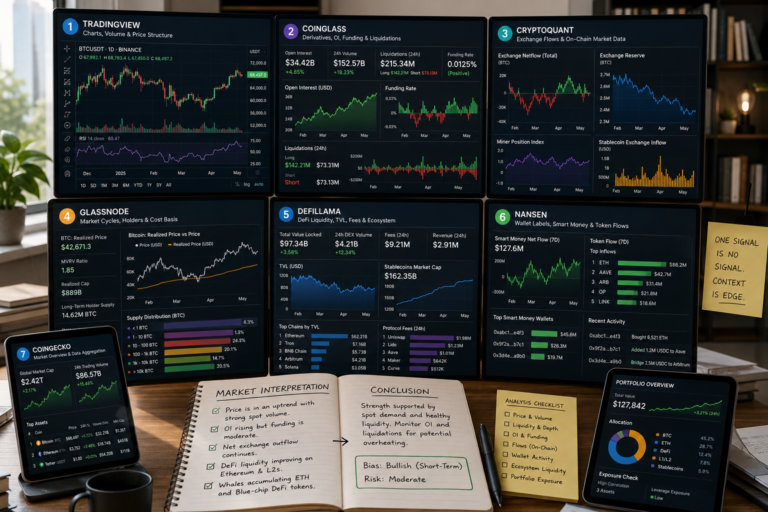
Market data aggregated by platforms like CoinGecko shows that a significant share of crypto trading activity occurs on centralized exchanges, which remain dominant in spot volume compared to decentralized alternatives.
This creates a structural gap between where liquidity is visible (on-chain) and where it is actually concentrated (off-chain).
👉 Insight: portfolio tracking systems that rely only on on-chain data miss a large portion of real market liquidity.
3. DeFi Position Tracking (Critical Layer)
This is where most setups fail.
DeFi positions are dynamic:
- LP tokens fluctuate with market conditions
- lending positions depend on collateral ratios
- staking rewards change over time
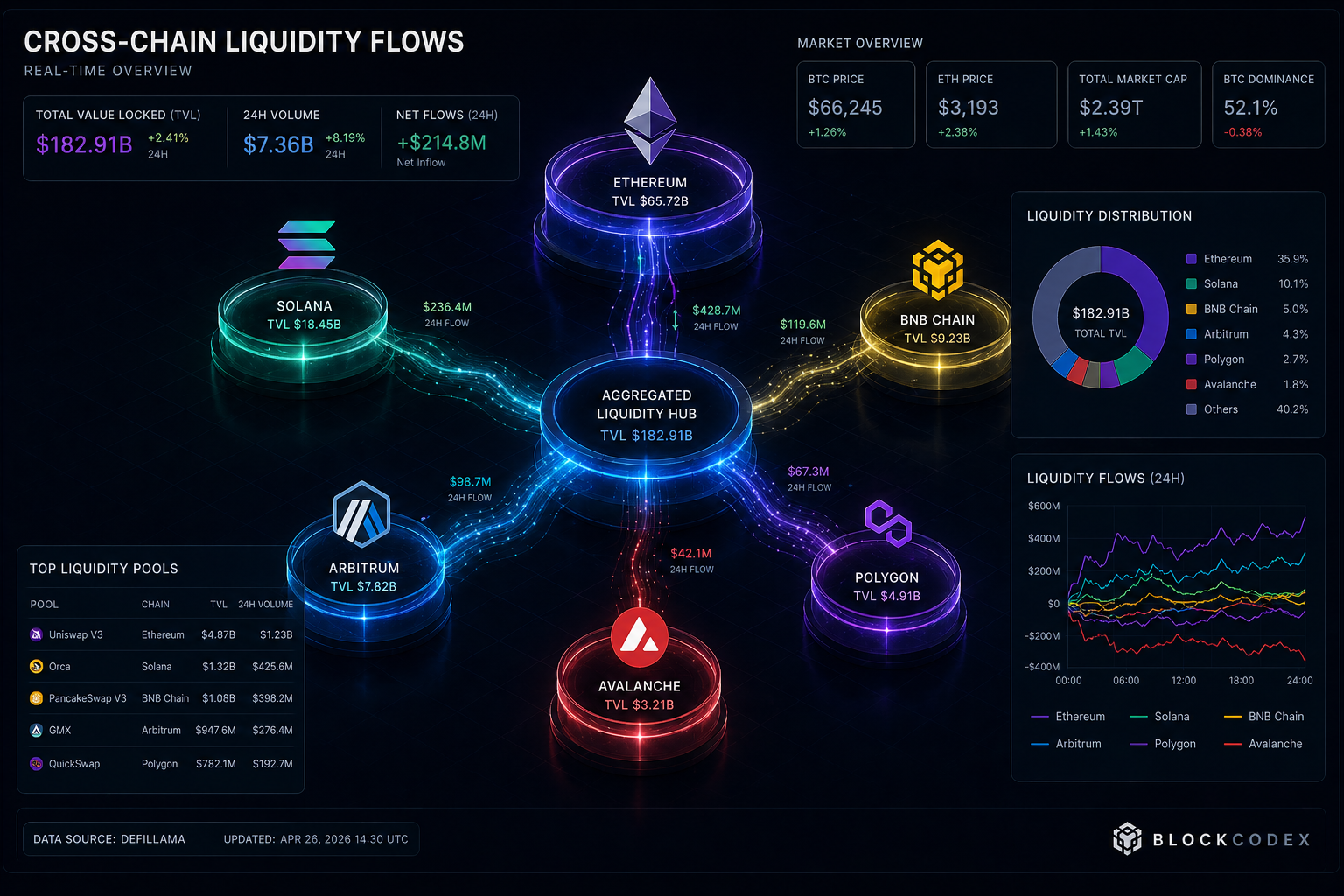
According to DeFiLlama, total value locked (TVL) represents the aggregate value of assets deposited in protocol smart contracts, a metric often compared to assets under management in traditional finance.
However, this metric is highly sensitive to both price movements and deposit flows. For example, a protocol can experience a decline in TVL even if capital inflows remain stable, simply due to a drop in underlying asset prices.
👉 Insight: TVL does not isolate capital behavior — it mixes market performance with actual liquidity, which makes it an imperfect proxy for real exposure.
Three Best Crypto Portfolio Tracking Setups for Different Investor Profiles
Setup 1 — Basic (Single Platform)
Structure:
- exchange dashboard
- simple tracker
Works for:
- small portfolios
- limited DeFi exposure
Limitation:
- no insight into underlying risk
Setup 2 — Multi-Wallet Aggregation
Structure:
- portfolio tracker
- wallet explorer
Benefits:
- clearer asset distribution
- better tracking of capital flows
👉 This setup already improves visibility significantly.
Setup 3 — Advanced (Data-Driven Tracking)
Structure:
- portfolio aggregator
- on-chain analytics
- manual validation layer
Tools like Nansen allow investors to track labeled wallets and capital flows, helping identify concentration risks and behavioral patterns.
👉 Insight:
Tracking who holds and moves capital is often more important than tracking price.
Data Insight: Portfolio Tracking Is Becoming Harder
One structural trend is often overlooked:
👉 portfolios are becoming more complex faster than tracking tools improve.
According to Messari research, the expansion of multi-chain ecosystems has significantly increased fragmentation, forcing investors to track positions across multiple environments simultaneously.
👉 Insight:
More chains = more blind spots
The Most Misunderstood Element: Conditional Value
A key mistake is assuming portfolio value is absolute.
In reality, part of it is conditional:
- LP positions depend on liquidity
- yield depends on incentives
- DeFi exposure depends on protocol health
This means:
👉 portfolio value can change even without price movement
Risk Layer Often Ignored
Even advanced tracking setups miss critical risks.
1. Smart Contract Risk
Assets in DeFi depend on protocol security.
2. Liquidity Risk
Positions may not be easily exit-able.
3. Correlation Risk
Assets that appear diversified can behave similarly under stress.
These risks are often invisible in standard dashboards.
For a deeper breakdown, see: “Liquidity in Crypto Markets: 7 Critical Misconceptions Investors Still Get Wrong”
Practical Framework (Data-Driven Approach)
Instead of relying on tools alone, investors should build a layered approach:
Step 1: Aggregate all wallets
Step 2: Integrate exchange data
Step 3: Track DeFi exposure
Step 4: Add on-chain behavioral analysis
👉 Goal:
Not just track value, but understand how it evolves
Key Takeaways
- Portfolio tracking is not just aggregation—it is analysis
- Data without context leads to false conclusions
- On-chain behavior reveals hidden risks
- DeFi introduces conditional exposure
- Multi-chain environments increase complexity
Conclusion
The best crypto portfolio tracking setups are those that integrate multiple data layers and reflect the structural realities of crypto markets.
Basic dashboards provide convenience, but often hide critical risks.
Investors who rely on data-driven tracking systems gain a clearer understanding of:
- capital allocation
- liquidity exposure
- structural risk
Ultimately, the advantage is not in seeing more data—but in understanding what that data actually represents.
Ultimately, the best crypto portfolio tracking setups are those that provide clarity on capital flows, risk exposure, and portfolio structure.