The best wallet setup for airdrops is not one wallet.
It is a route.
At one end of that route, there are uncertain claim pages, early protocols, bridges, signatures and token approvals. At the other end, there are long-term holdings and valuable rewards that should rarely interact with anything.
The mistake is allowing those two worlds to share the same address.
Many investors buy a hardware wallet and assume that every transaction signed with it becomes safe. Others do the opposite and keep their entire portfolio inside the same browser wallet they use for airdrops, DeFi, testnets and unknown applications.
Neither setup contains risk properly.
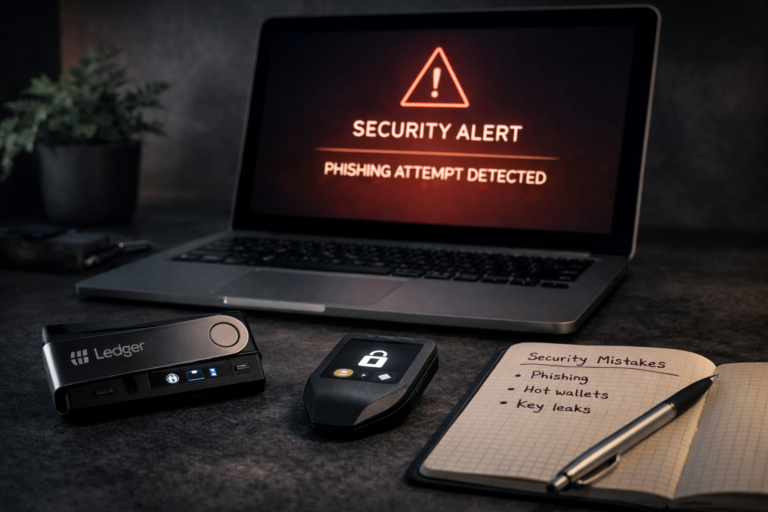
A hardware wallet protects private keys from an internet-connected environment, but it cannot decide whether a smart-contract interaction is sensible. If the owner authorizes a malicious approval or signs the wrong transaction, the hardware device may still execute the instruction.
A hot wallet is convenient for frequent activity, but its convenience makes it a poor destination for assets that should remain untouched.
A test wallet can absorb uncertain interactions, but only if it holds almost nothing and remains genuinely disposable.
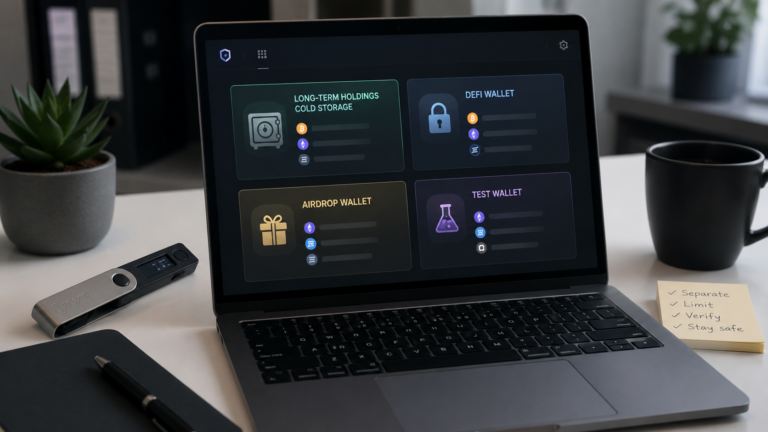
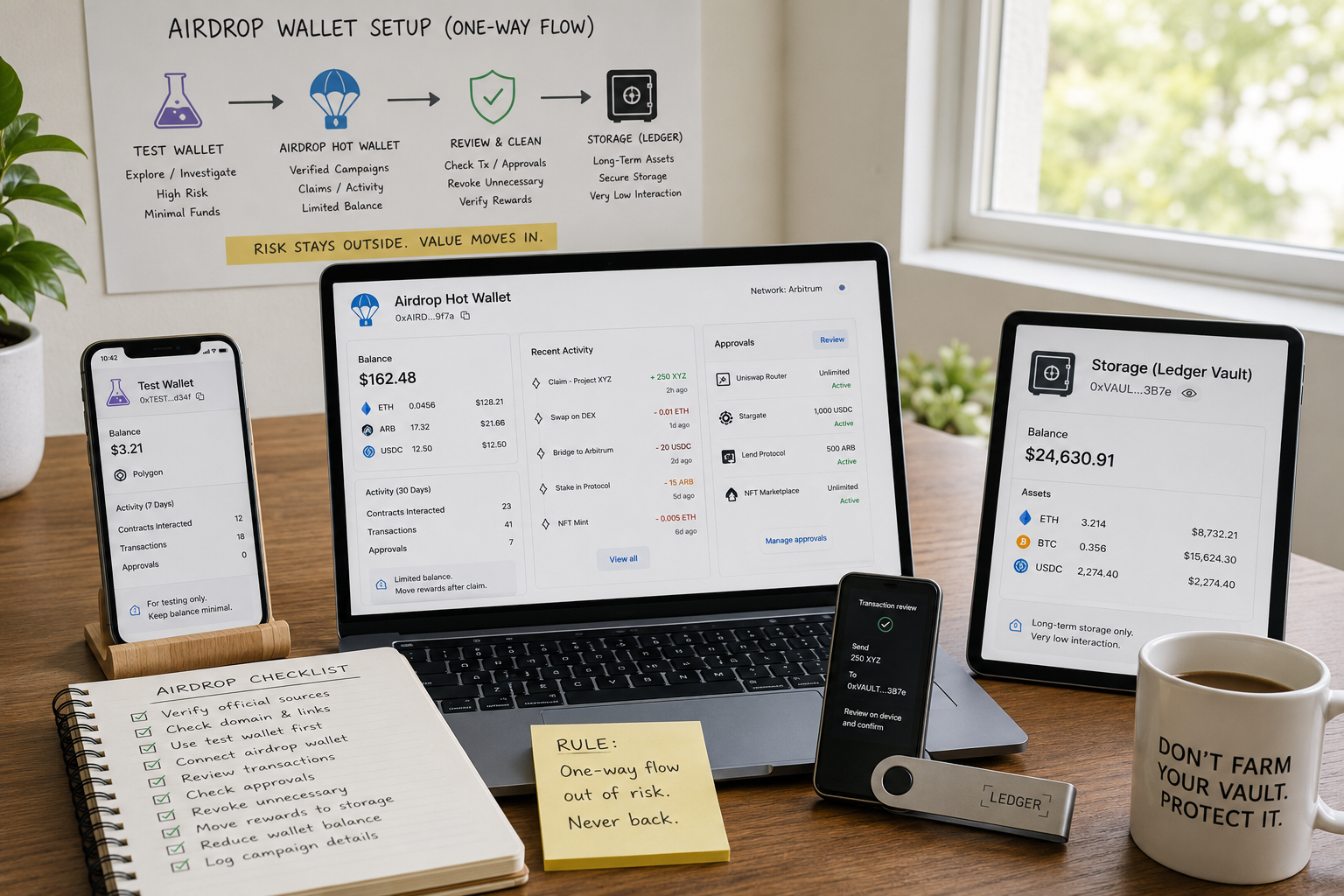
The strongest setup gives each wallet one job and creates a one-way movement of value:
Test → Claim → Review → Storage
Risky wallets should never fund or control the storage layer. Valuable rewards should move out of the active environment once they have been verified.
That is the architecture behind the best wallet setup for airdrops.
Stop Looking for One Perfect Wallet
Most wallet guides begin by asking which application or hardware device is best.
That is the wrong first question.
The better question is:
What type of mistake should this wallet be allowed to survive?
A cold-storage wallet should survive years of inactivity, device loss and changes in software. It should not need to survive hundreds of experimental dApp interactions because it should never be exposed to them.
An airdrop wallet should survive a bad claim, forgotten approval or questionable protocol interaction without putting the wider portfolio at risk.
A test wallet should be expendable. Its purpose is to interact with environments that have not yet earned enough trust for the regular airdrop wallet.
No wallet can perform all three roles without creating conflicting security requirements.
The best setup is therefore not based on one product. It is based on separation.
BlockCodex explores the broader principle in Why Wallet Separation in Crypto Is a Powerful Security Habit.
The Airdrop Airlock
A useful way to picture the setup is as an airlock.
A spacecraft does not open its internal cabin directly to the outside environment. There is a controlled intermediate chamber where exposure can be contained before anything moves further inside.
An airdrop wallet should perform the same function.
The test wallet touches the least trusted environment. The claim wallet handles campaigns that have passed basic verification. The hardware-protected storage wallet receives value only after the interaction has been completed and checked.
The flow should look like this:
| Layer | Primary Role | Typical Balance | Interaction Level |
|---|---|---|---|
| Ledger vault | Long-term storage and valuable rewards | High | Very low |
| Ledger-backed active wallet | Established DeFi and higher-value transactions | Moderate | Controlled |
| Airdrop hot wallet | Verified campaigns and eligibility activity | Low | High |
| Test wallet | Unknown dApps and disposable experiments | Minimal | Very high |
This structure does not make experimental crypto safe.
It prevents experimental crypto from reaching everything else.
Layer 1: The Ledger Vault
The Ledger vault is where meaningful value should finish, not where uncertain activity should begin.
It can hold:
- Long-term BTC and ETH.
- Important ecosystem positions.
- Valuable airdrop rewards after verification.
- Stablecoins held as reserves.
- Assets that do not need regular dApp interaction.
- NFTs or tokens that would be painful to lose.
The vault should have a clean transaction history and very few active approvals. Ideally, it receives assets, holds them and sends them only through carefully reviewed transactions.
Ledger recommends asset segregation and advises users to interact with potentially risky airdrops through an account containing minimal assets rather than exposing the main holdings.
That advice defines the proper role of Ledger in an airdrop strategy.
Ledger should protect the reward, not chase the reward.
The device keeps private keys inside its protected hardware environment and requires physical confirmation for transactions. Current Ledger devices also use a secure screen so that important transaction information can be reviewed independently from the computer or phone initiating the action.
However, physical confirmation is valuable only when the user understands what is being confirmed.
A Ledger device is a secure signer.
It is not a scam detector.
Investors building the storage layer can compare the current Ledger models here:
Compare Ledger devices and choose the right storage setup
The recommendation remains credible because Ledger is positioned where it adds the most value: protecting important assets, not interacting blindly with every new claim page.
Layer 2: The Ledger-Backed Active Wallet
Not every Ledger account needs to be a completely inactive vault.
Investors who regularly use established DeFi protocols may want a second Ledger-protected account for higher-value on-chain activity. This creates physical signing friction while keeping the main storage account away from routine smart-contract interaction.
The difference between the two accounts should remain clear.
The vault stores assets.
The active account interacts with selected protocols.
This active account may be appropriate for:
- Established lending protocols.
- Long-term staking.
- Known DEXs.
- Larger DeFi positions.
- Important transactions that benefit from on-device verification.
It should not become the default wallet for unknown airdrops, new bridges, speculative mints or suspicious eligibility pages.
Separate accounts can isolate balances and token approvals because each blockchain address has its own transaction and permission history. However, several accounts created from the same recovery phrase are not fully independent. The same phrase controls access to the accounts associated with it, so phrase exposure can compromise the wider structure. Ledger confirms that its devices provide access to the accounts linked to the Secret Recovery Phrase used during setup.
This distinction is important:
- Separate address: useful for isolating smart-contract exposure.
- Separate recovery phrase: stronger isolation against seed compromise.
For most investors, the essential separation is between the Ledger recovery phrase and the recovery phrase used by the hot airdrop wallet.
Layer 3: The Airdrop Hot Wallet
The airdrop hot wallet is the working wallet.
It can be used for:
- Verified claim pages.
- Eligibility checks.
- Points programs.
- Testnet participation.
- Small bridge transfers.
- Early ecosystem activity.
- Limited swaps and staking tasks.
- Receiving minor rewards.
Its balance should stay deliberately low.
The wallet needs enough native tokens to pay gas and enough capital to perform planned activities, but it should not hold long-term reserves or valuable rewards unnecessarily.
A hot wallet is practical because it is fast, widely compatible with dApps and easy to replace. That convenience is also the reason it should be treated as an operational tool rather than permanent storage.
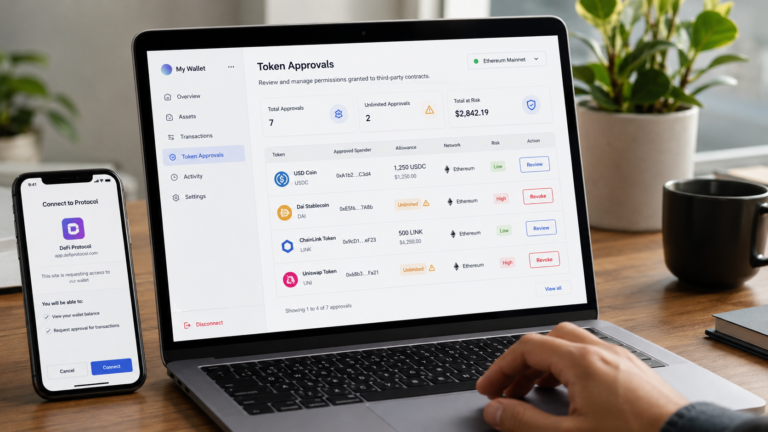
MetaMask explains that merely connecting a wallet allows a dApp to view the public address and propose actions; funds do not move unless the user authorizes a transaction, signature or approval. Approvals are more sensitive because they can grant a smart contract permission to access a particular token and quantity.
This means the airdrop wallet should be evaluated by what it has authorized, not only by the websites to which it has connected.
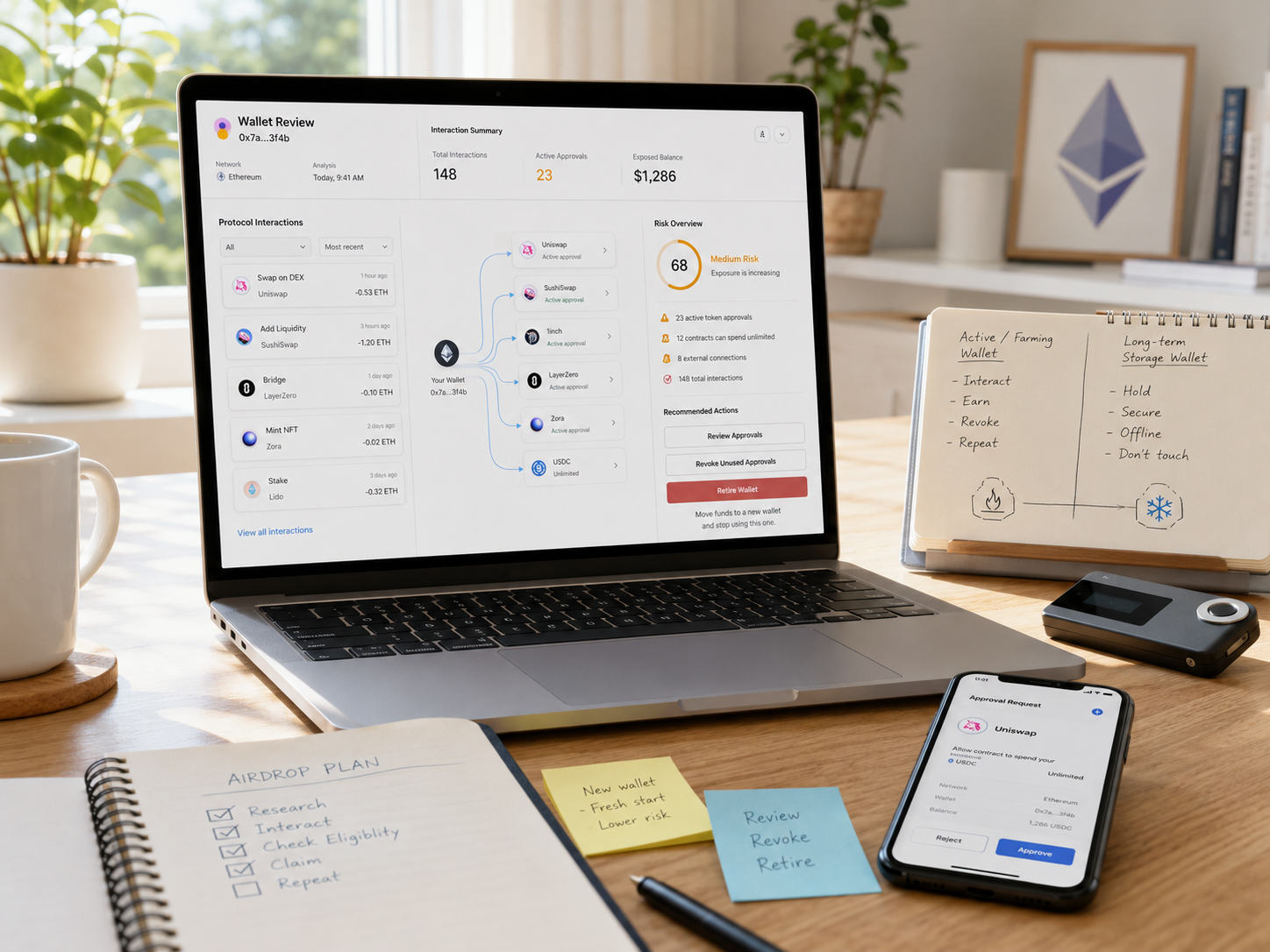
A clean operational wallet should make the following questions easy to answer:
- Which protocols has it used?
- Which contracts still have permissions?
- How much capital is exposed?
- Which rewards remain inside?
- Can the wallet be retired without disrupting the portfolio?
When those questions become difficult, the wallet is no longer clean enough for its role.
For a deeper framework, see Airdrop Wallet Strategy: 7 Smart Rules for Safer Crypto Claims.
Layer 4: The Test Wallet
The test wallet is not a smaller version of the main wallet.
It is a disposable environment.
Use it when:
- The project source is unclear.
- The dApp is extremely new.
- The contract has little history.
- The website is being investigated rather than trusted.
- The claim looks plausible but has not passed full verification.
- The user only wants to observe the interaction flow.
- The activity does not justify exposing the normal claim wallet.
The test wallet should contain almost nothing. It may hold a minimal gas balance and a small experimental amount, but no valuable assets or important NFTs.
Its purpose is to answer a question:
What does this application actually ask the wallet to do?
Even here, the user should not enter a recovery phrase, approve suspicious permissions or sign something they cannot interpret. A test wallet limits financial exposure; it does not make malicious software or careless behavior harmless.
The strongest test wallet is cheap to abandon.
Once the history becomes questionable or difficult to audit, stop using it and create a clean one.
The One-Way Value Rule
The four-layer structure works only when value moves in the correct direction.
A practical flow is:
- The test wallet investigates uncertain activity.
- The airdrop wallet completes campaigns that have passed verification.
- The transaction and received token are checked.
- Unnecessary approvals are removed.
- Valuable rewards move to the Ledger vault.
- The active wallets return to limited balances.
The vault should not regularly send capital back into the same risky environment.
Doing so creates direct on-chain links between storage and farming activity, increases public portfolio visibility and exposes more value to operational mistakes.
This one-way rule also prevents a successful claim from turning the hot wallet into permanent storage.
A reward may arrive in a high-interaction wallet, but it does not need to remain there.
Claim wallets collect.
Storage wallets preserve.
A Hardware Wallet Does Not Cancel Smart-Contract Risk
This point deserves special attention because it is often misunderstood.
A hardware wallet protects keys from direct online exposure. It helps ensure that transaction signing happens inside a dedicated device rather than entirely on an internet-connected computer or phone.
It does not guarantee that the signed transaction is safe.
A malicious page may still attempt to obtain:
- An unlimited token approval.
- An NFT operator permission.
- A permit signature.
- A harmful contract interaction.
- A transfer disguised as an eligibility check.
- A transaction containing unexpected addresses or amounts.
MetaMask describes signature phishing as an attack where a user provides an off-chain signature that can later be used to steal assets. It also notes that malicious approval requests are designed to make it difficult for users to understand what they are signing.
Ledger’s own security guidance similarly emphasizes segregation, approval review and transaction verification rather than presenting hardware protection as a complete defense against user-authorized actions.
This is why using the main Ledger vault for unknown airdrops is a poor setup.
The keys may remain offline while the user still authorizes the wrong intent.
Which Ledger Model Fits This Setup?
Ledger’s current lineup includes the Nano S Plus, Nano X, Nano Gen5, Flex and Stax. The right choice depends more on signing habits than on portfolio size alone.
| User Profile | Suitable Ledger | Why It Fits |
|---|---|---|
| Desktop-first long-term holder | Nano S Plus | Straightforward USB setup for a low-interaction vault |
| Mobile-oriented investor | Nano X | Bluetooth connectivity and iOS support |
| Frequent signer wanting clearer review | Nano Gen5 or Flex | Secure touchscreen and more readable transaction review |
| Premium self-custody setup | Stax | Larger premium touchscreen experience |
| Airdrop-only beginner | Hardware vault plus separate hot wallet | Keeps claims away from storage regardless of model |
The Nano X is designed for mobile use and includes Bluetooth and iOS compatibility. The Nano Gen5 adds a secure touchscreen with USB-C, Bluetooth and NFC, while Ledger Flex and Stax also belong to Ledger’s secure touchscreen range.
The most expensive model is not automatically the best choice.
For a vault that signs very rarely, the Nano S Plus may already meet the core need. An investor who signs more frequently may value the larger touchscreen experience because transaction readability becomes more important.
BlockCodex compares the wider category in Best Hardware Wallets: Ledger vs Alternatives.
View the current Ledger range and compare features
This CTA appears after the reader understands the setup and can choose based on actual use rather than brand hype.
Three Setups for Three Different Users
The Occasional Airdrop Claimant
This investor claims only well-known distributions and does not farm dozens of protocols.
The practical setup is:
- One Ledger vault for long-term assets.
- One small hot wallet for eligibility and claims.
- Approval review after each campaign.
- Valuable rewards transferred to the vault.
A separate test wallet can be created only when an uncertain application needs investigation.
This setup remains simple without exposing the main portfolio.
The Active Airdrop Farmer
This user interacts with new chains, points programs, bridges and several campaigns.
The stronger setup is:
- Ledger vault for long-term assets.
- Optional Ledger-backed account for established DeFi.
- Dedicated airdrop hot wallet with a fixed balance limit.
- Separate disposable test wallet.
- A campaign log.
- Regular approval reviews.
- A wallet retirement policy.
The farmer should avoid using one hot wallet forever. As interaction history and permission debt accumulate, replacing the wallet can become safer than continuing to clean it indefinitely.
The High-Value Portfolio Holder
This investor has enough capital that one wrong signature could cause serious damage.
The setup should prioritize stronger boundaries:
- Dedicated Ledger vault with its own recovery phrase.
- Minimal dApp interaction from the vault.
- Separate Ledger-backed active account only when needed.
- Hot wallet with limited funds for verified campaigns.
- Disposable test wallet.
- Rewards moved to storage after verification.
- Offline recovery process documented clearly.
The goal is not to eliminate all interaction.
It is to ensure that experimental activity cannot reach portfolio reserves.
Do Not Import an Old Hot-Wallet Phrase Into Ledger
A common mistake is buying a Ledger and importing the recovery phrase previously generated by MetaMask or another internet-connected wallet.
That does not create a clean cold-storage environment.
If the phrase was generated or exposed on an online device, placing it into a hardware wallet cannot undo the previous exposure. Ledger explicitly advises users not to enter a MetaMask recovery phrase into a Ledger device because that phrase was generated in an online environment.
The safer process is:
- Initialize Ledger as a new device.
- Allow it to generate a new recovery phrase.
- Record that phrase offline.
- Create fresh Ledger-protected accounts.
- Transfer assets from the old wallet to the new addresses.
- Keep the old hot-wallet phrase completely separate.
This ensures the hardware vault begins with keys that were generated inside the protected device environment.
A new device deserves a new security boundary.
The Post-Claim Transfer Routine
Airdrop security does not end when the token arrives.
A clean post-claim routine should include:
Verify the transaction
Use the relevant blockchain explorer to confirm the contract, token and destination.
Review approvals
Check whether the claim created any new token or NFT permissions.
Decide whether the token is worth keeping
Not every reward belongs in long-term storage. Some may be sold, monitored or left temporarily while liquidity develops.
Move meaningful value
When the reward becomes valuable enough to protect, transfer it to the appropriate storage or portfolio wallet.
Reduce the hot-wallet balance
Return the airdrop wallet to its intended operational limit.
Record the campaign
Note which wallet claimed, which contract was used and whether any approval remains.
This routine creates a controlled transition from opportunity to ownership.
Without it, the wallet architecture slowly collapses as rewards and permissions accumulate in the same high-interaction address.
Common Wallet Setup Mistakes
Using Ledger for Every Claim
A hardware wallet is useful for important signing, but the storage account should not interact with unknown claim pages.
Keeping All Accounts Under One Recovery Phrase
Different addresses can isolate approvals, but they still share phrase-level exposure when derived from the same recovery phrase.
Letting the Hot Wallet Become Valuable
Rewards should move out once they exceed the wallet’s operational purpose.
Funding Test Wallets With Too Much Capital
A test wallet should remain disposable.
Treating Wallet Connection as the Only Risk
The more important questions concern approvals, signatures and transactions requested after connection.
Disconnecting Without Reviewing Permissions
Disconnecting a website does not necessarily revoke token allowances already granted.
Reusing an Online Recovery Phrase in Ledger
Cold-storage protection should begin with a new phrase generated by the hardware device.
Best Wallet Setup for Airdrops Checklist
Before beginning a new campaign, verify the setup:
- Long-term holdings are stored separately.
- The Ledger vault has minimal dApp interaction.
- The airdrop wallet contains only limited funds.
- An even smaller test wallet is available for uncertain sites.
- The project and claim domain have been independently verified.
- The wallet request matches the expected action.
- Token approvals are reviewed after the campaign.
- Valuable rewards move away from the claim wallet.
- The hot wallet can be retired without affecting the portfolio.
- Recovery phrases remain offline and separate.
This setup should be easy to explain.
When the wallet architecture becomes difficult to describe, it is probably too complicated to maintain safely.
For the broader framework behind these layers, see Best Crypto Security Stack and Legit Crypto Airdrops.
Final Thoughts
The best wallet setup for airdrops is not the wallet with the most features.
It is the setup that prevents a small speculative opportunity from becoming a large portfolio risk.
Ledger belongs at the protected end of the system, where meaningful assets and verified rewards are stored. A limited hot wallet handles legitimate airdrop activity, while a disposable test wallet absorbs interactions that have not yet earned enough trust.
The most important rule is directional: risk stays outside, while verified value moves inward.
A hardware wallet protects keys, but wallet separation protects the portfolio structure. Hot wallets make interaction practical, but balance limits keep that convenience from becoming dangerous. Test wallets create a place to investigate without pretending uncertainty has disappeared.
A strong setup does not rely on perfect judgment.
It assumes that mistakes remain possible and ensures that one mistake cannot reach everything.
That is what makes the wallet architecture safer.