Total Value Locked (TVL) is one of the most cited metrics in crypto—especially in DeFi. A protocol can show billions in TVL—and still be structurally fragile.
TVL is widely used as a proxy for adoption or safety, but without context, it can be deeply misleading.
Reading TVL properly isn’t about the number itself. It’s about understanding what drives it, what sustains it, and what causes it to move. Without that context, TVL becomes a vanity metric.
This guide breaks down how to read TVL in crypto the right way—by focusing on capital behavior, structural incentives, and hidden risks.
Table of Contents
What TVL Actually Measures (and What It Doesn’t)
At its core, TVL represents the total value of assets deposited in a protocol.
But that definition hides an important nuance:
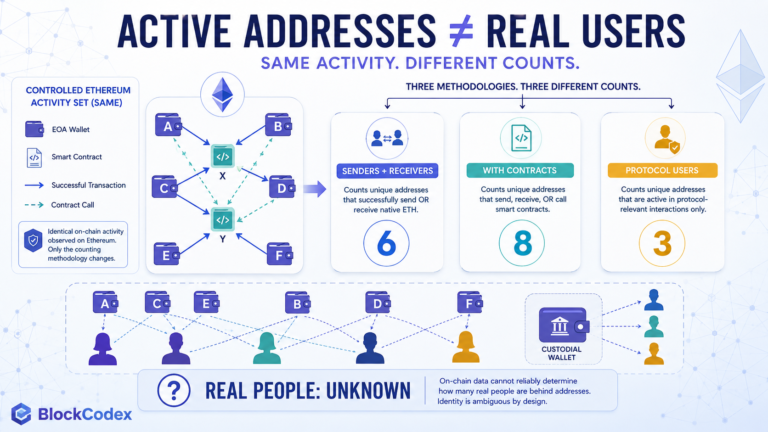
TVL measures capital presence, not capital conviction.
There are two fundamentally different reasons capital enters a protocol:
- Product-driven demand (users need the service)
- Incentive-driven farming (users chase rewards)
These two flows produce the same TVL number—but imply completely different realities.
Why TVL Alone Is a Weak Signal
A high TVL is often interpreted as a sign of trust. That assumption is incomplete.
Here’s why:
1. TVL is highly sensitive to token price
If ETH doubles, TVL across Ethereum-based protocols increases—even if no new capital enters.
This creates a false signal:
- TVL ↑ does not necessarily mean inflows ↑
- It may just reflect market appreciation
2. TVL can be inflated by incentives
Protocols often bootstrap liquidity using:
- Token emissions
- Liquidity mining rewards
This leads to mercenary capital, which is:
- Highly reactive
- Short-term focused
- Quick to exit
A protocol can show strong TVL growth while being structurally fragile.
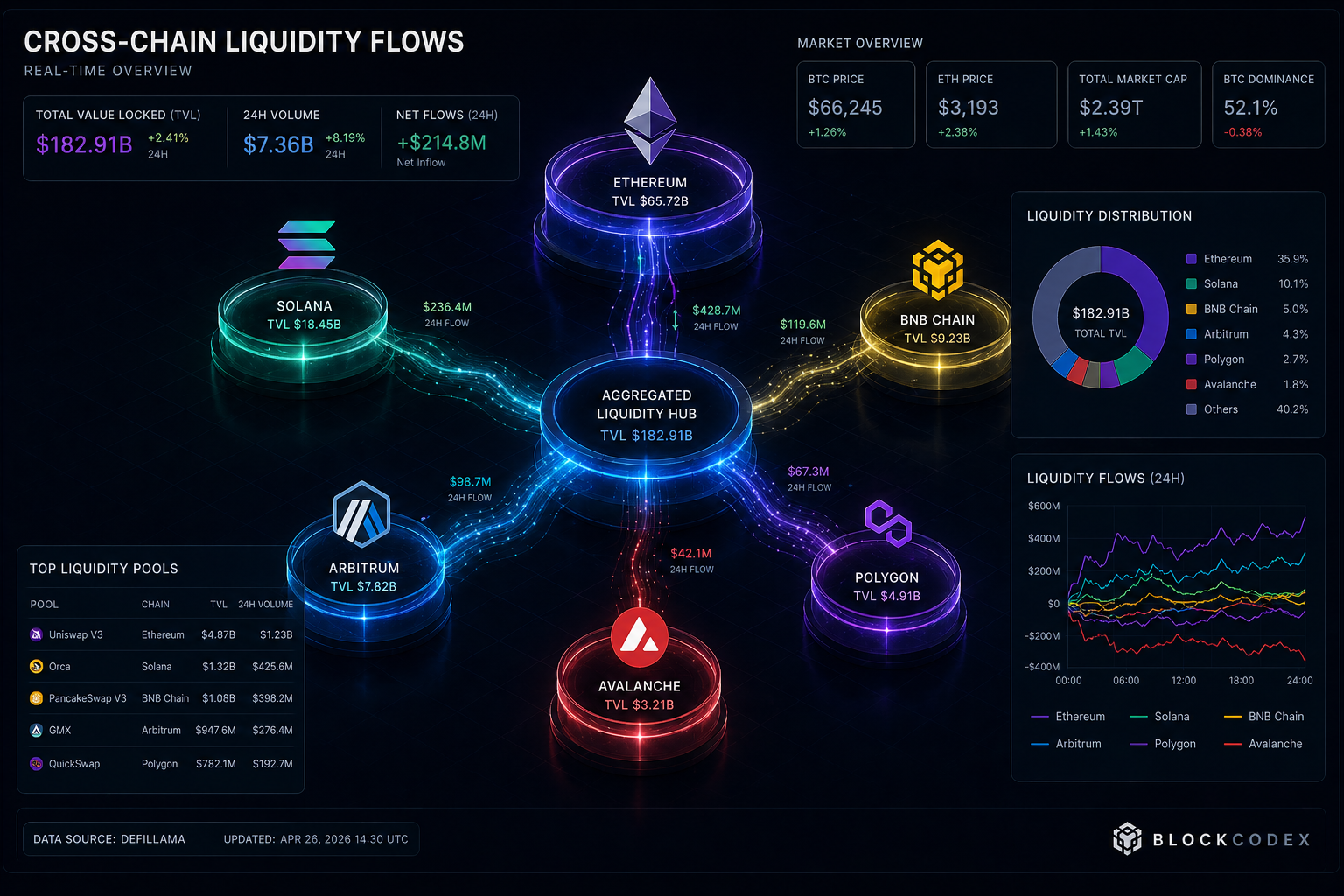
According to DeFiLlama, total value locked across DeFi has shown significant variation across market cycles, highlighting how sensitive TVL is to both price movements and liquidity incentives rather than pure user adoption.
How to Read TVL in crypto Properly
To effectively read TVL in crypto, it’s essential to move beyond surface-level numbers and focus on the underlying drivers of capital flows. To extract real insight, TVL must be analyzed in context.
1. TVL vs Token Price
The first step is to isolate organic growth.
Ask:
- Is TVL rising because of price, or because of deposits?
If:
- TVL ↑ while token price ↓ → real inflows
- TVL ↑ while token price ↑ → ambiguous signal
This simple comparison already filters out a large part of the noise.
2. TVL Stability Over Time
Short-term spikes in TVL are not meaningful.
What matters is:
- Retention of capital
A stable TVL suggests:
- Users are not just entering
- They are staying
That often indicates:
- Product-market fit
- Sustainable yield
- Lower reliance on incentives
3. TVL Distribution Across Protocol Layers
Not all TVL is equal depending on where it sits.
Compare:
- Lending protocols
- DEX liquidity pools
- Yield aggregators
Each reflects a different type of behavior:
| Category | What TVL Represents |
|---|---|
| Lending (e.g. Aave) | Capital seeking yield with moderate risk |
| DEX (e.g. Uniswap) | Capital enabling trading activity |
| Yield Aggregators | Optimized, often more reactive capital |
To properly isolate these dynamics, investors often rely on aggregated data platforms like DeFiLlama, which provide real-time tracking of TVL across protocols and chains, helping distinguish between organic inflows and market-driven fluctuations.
The Most Overlooked Insight: TVL Quality
The key question isn’t “how much TVL?”
It’s:
What is the quality of that TVL?
TVL quality depends on three factors:
1. Source of capital
- Retail liquidity
- Institutional flows
- Protocol-owned liquidity
Each behaves differently under stress.
Understanding where capital comes from is critical, especially when evaluating whether liquidity is structurally committed or purely opportunistic. This is closely tied to how token incentives are designed, as explored in “7 Powerful Ways to Read Tokenomics Like an Analyst in 2026”.
2. Incentive dependency
If removing rewards causes TVL to collapse, the capital was never “real demand”.
This is one of the most critical signals to monitor.
3. Composability exposure
Some TVL is recursively reused across DeFi (looping, rehypothecation).
This inflates numbers while increasing systemic risk.
Reading TVL Through Market Cycles
TVL behaves differently depending on market conditions.
Bull Market
- Rapid TVL expansion
- Driven by:
- Yield farming
- Speculative inflows
Signal interpretation:
- TVL becomes less reliable
- Noise increases
Bear Market
- TVL contraction
- Capital becomes selective
Signal interpretation:
- Surviving TVL = higher quality
- Stronger indicator of real usage
TVL vs Volume: A Critical Comparison
TVL should never be analyzed alone.
Pair it with:
- Trading volume
- Fee generation
Why?
Because:
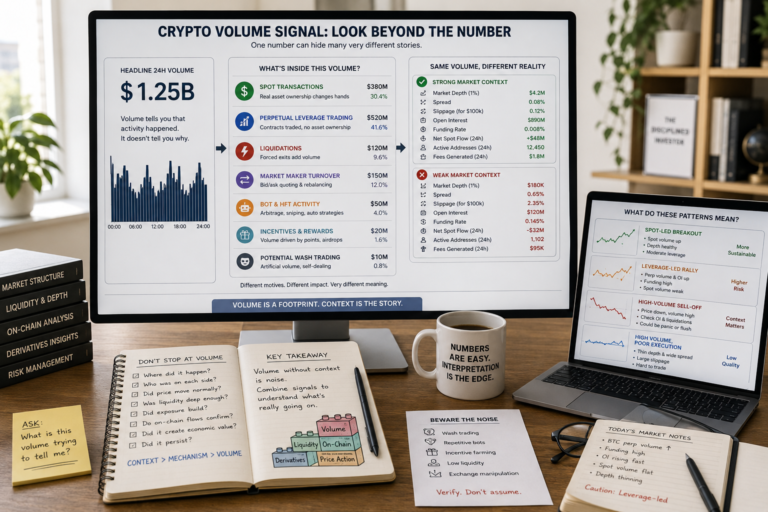
TVL shows capital parked
Volume shows capital used
A protocol with:
- High TVL + low volume → inefficient capital
- Moderate TVL + high volume → strong utilization
This second case is often more valuable.
What This Means for Investors
When interpreted correctly, TVL becomes less of a headline metric and more of a diagnostic tool.
A rising TVL without corresponding increases in usage or volume often signals inefficient or incentive-driven capital.
Conversely, stable or moderately growing TVL paired with strong activity can indicate sustainable demand.
The key is not to track TVL in isolation, but to evaluate how effectively that capital is being used within a protocol.
Practical Example of Interpretation
Imagine two protocols:
| Metric | Protocol A | Protocol B |
|---|---|---|
| TVL | High | Medium |
| Volume | Low | High |
| Incentives | High | Low |
At first glance, most investors would assume Protocol A is stronger — which is exactly where TVL can be misleading.
But deeper analysis shows:
- A relies on incentives
- Capital is idle
While B shows:
- Active usage
- Organic demand
Conclusion: B likely has stronger fundamentals despite lower TVL.
Risks Hidden Behind TVL
TVL can mask several risks:
Liquidity Illusion
TVL does not equal:
- Available liquidity
- Exit capacity
Large withdrawals can still trigger slippage or instability.
Smart Contract Risk
TVL concentration increases:
- Attack surface
- Potential loss impact
High TVL can actually make a protocol a bigger target.
Reflexivity
Falling TVL can trigger:
- Loss of confidence
- More withdrawals
This creates feedback loops that accelerate collapse.
Sudden drops in TVL are not always random — they can be structurally driven by scheduled liquidity events such as token unlocks, which often reshape short-term market behavior. This dynamic is explored in “7 Powerful Insights on How Token Unlocks Impact Price and Market Behavior”.
Implications for Investors
Reading TVL correctly gives a major edge.
Instead of asking:
- “Which protocol has the highest TVL?”
Focus on:
- Which protocol retains capital without incentives
- Which protocol converts TVL into activity
- Which protocol maintains stability during stress
These signals are far more predictive of long-term survival.
Conclusion
Learning how to read TVL in crypto properly gives investors a clear edge, especially when distinguishing between real capital conviction and short-term liquidity driven by incentives.
TVL is not useless—but it is often misunderstood.
Used correctly, it reveals:
- Capital behavior
- Market structure
- Protocol resilience
Used blindly, it becomes misleading.
The real edge comes from shifting perspective:
Don’t measure how much capital is locked.
Measure why it’s there—and whether it will stay.