
On-chain activity is often cited as direct evidence of blockchain network adoption or decline. Metrics such as transaction counts, active addresses, and gas usage are frequently used to assess whether a network is gaining or losing relevance.
Because on-chain data is transparent and verifiable, it is often perceived as an objective measure of real usage. However, not all on-chain activity reflects genuine user engagement or sustainable adoption. Automated transactions, incentive-driven behavior, and short-term campaigns can significantly distort these signals.
Raw on-chain metrics, when taken at face value, can therefore lead to misleading conclusions. Understanding what these indicators actually represent requires context, methodological rigor, and careful interpretation over extended timeframes rather than isolated data points.
What Is On-Chain Activity?
On-chain activity refers to all actions recorded directly on a blockchain. This includes transactions, smart contract interactions, token transfers, and changes in wallet balances.
Unlike off-chain data, on-chain information is immutable and publicly verifiable. It provides a transparent record of how a network is being used over time.
For a technical overview of how blockchain data is recorded and verified, the Ethereum documentation provides a detailed explanation of on-chain transactions.
Commonly Used On-Chain Metrics
Analysts often rely on a set of core metrics to evaluate blockchain activity:
- Transaction count
- Active addresses
- Gas usage and fees paid
- Token transfer volume
- Smart contract interaction frequency
While these indicators are useful, each of them captures only a partial view of network behavior.
Why Raw On-Chain Activity Metrics Can Be Misleading
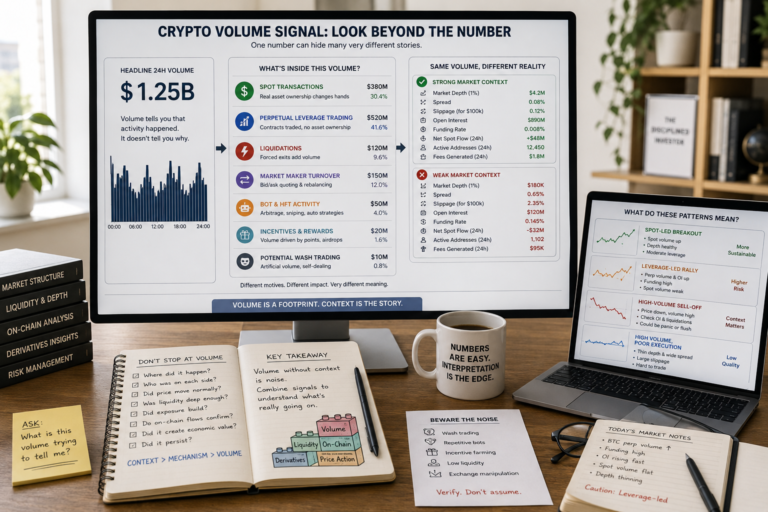
High transaction volumes do not necessarily indicate genuine user adoption. Automated scripts, incentive mechanisms, and spam transactions can artificially inflate on-chain metrics.
Similarly, spikes in active addresses are often linked to short-term behaviors such as airdrop farming rather than sustained network usage.
Adding Context to On-Chain Data
Interpreting on-chain activity correctly requires combining multiple metrics and analyzing them over longer timeframes.
Indicators such as coin age distribution, long-term holder behavior, and value settlement trends provide deeper insight into how participants interact with a blockchain beyond surface-level activity.
Short-Term Activity vs Long-Term Network Usage
Not all on-chain activity reflects the same type of network usage. Short-term spikes are often driven by temporary incentives such as token launches, airdrop campaigns, or speculative behavior.
In contrast, long-term usage patterns are better observed through sustained transaction volume, consistent contract interaction, and the behavior of long-term holders. Distinguishing between these two dynamics helps avoid overestimating adoption based on temporary activity bursts.
Tools Used for On-Chain Analysis
Accessing and interpreting raw blockchain data typically requires specialized analytics platforms that aggregate and contextualize on-chain information.
Tools like Glassnode or Coinmetrics provide structured access to long-term network metrics, allowing analysts to study usage patterns, holder behavior, and macro trends across multiple blockchains.
Interpreting Trends Over Time
Short-term fluctuations in on-chain activity are common and often driven by external events such as protocol upgrades, token launches, or market speculation.
More reliable insights emerge when analyzing sustained trends over months or years, rather than reacting to isolated data points.
What On-Chain Activity Does Not Show
On-chain data does not capture off-chain behavior, including exchange-internal transfers, centralized order book activity, or user intent.
It also does not provide direct insight into future price movements or market sentiment, which limits its use for short-term predictions.
Conclusion
On-chain activity is a powerful analytical tool when interpreted correctly. However, it requires context, discipline, and an understanding of its limitations.
Rather than focusing on individual metrics, a holistic approach to on-chain analysis provides a more accurate perspective on how blockchain networks evolve over time.
Disclaimer: This content is provided for informational purposes only and does not constitute financial or investment advice.



One thought on “What On-Chain Activity Really Tells Us About Network Usage?”